

Taking Things Social Story & SEL Activities Stealing & Asking Permission Honesty
$7.85
# of Pages: 43
File Type(s): ZIP, PDF, PPT
Preview Product
You'll LOVE this resource!
- Instant access download!
- No Hassle Refunds
- Secure Payments
Description
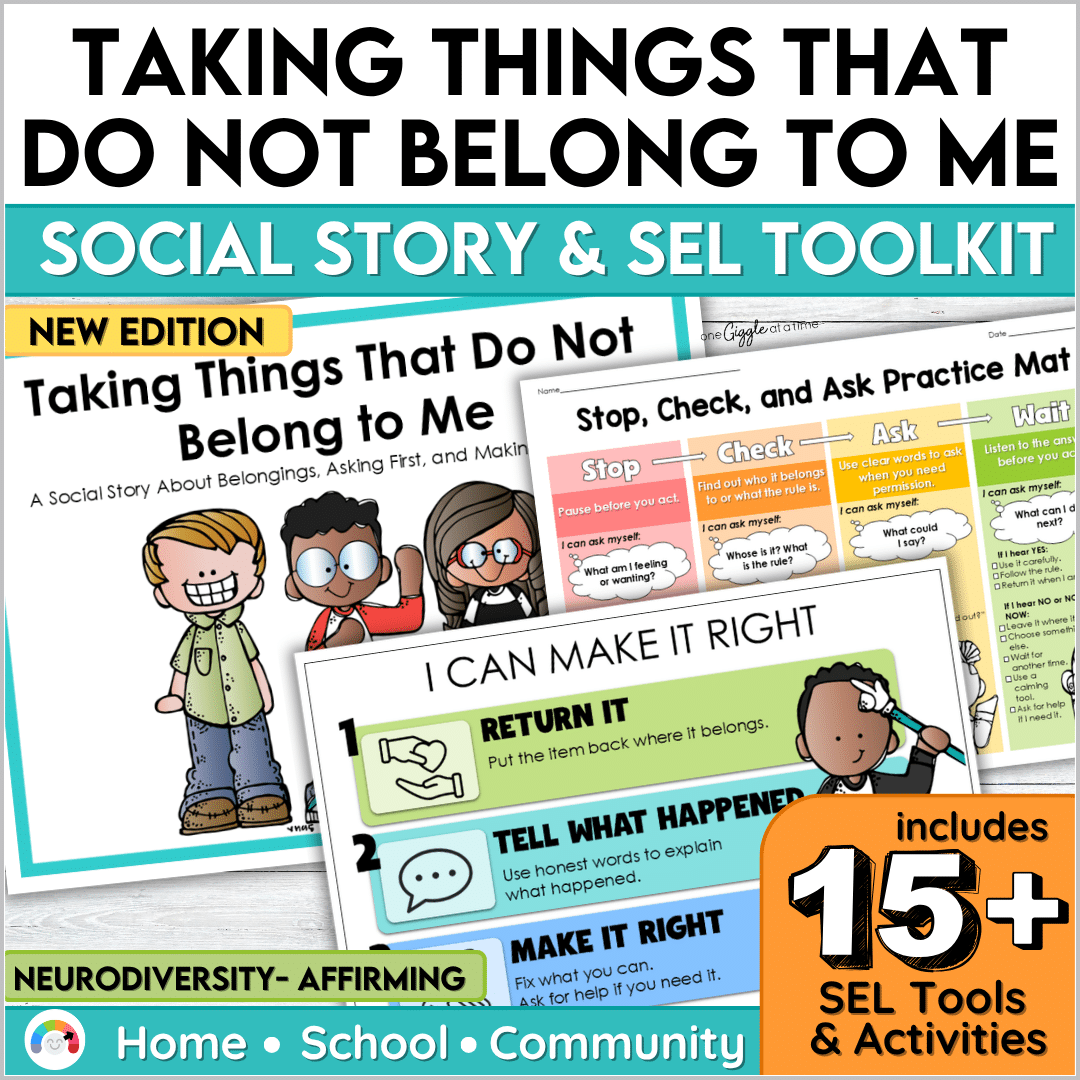
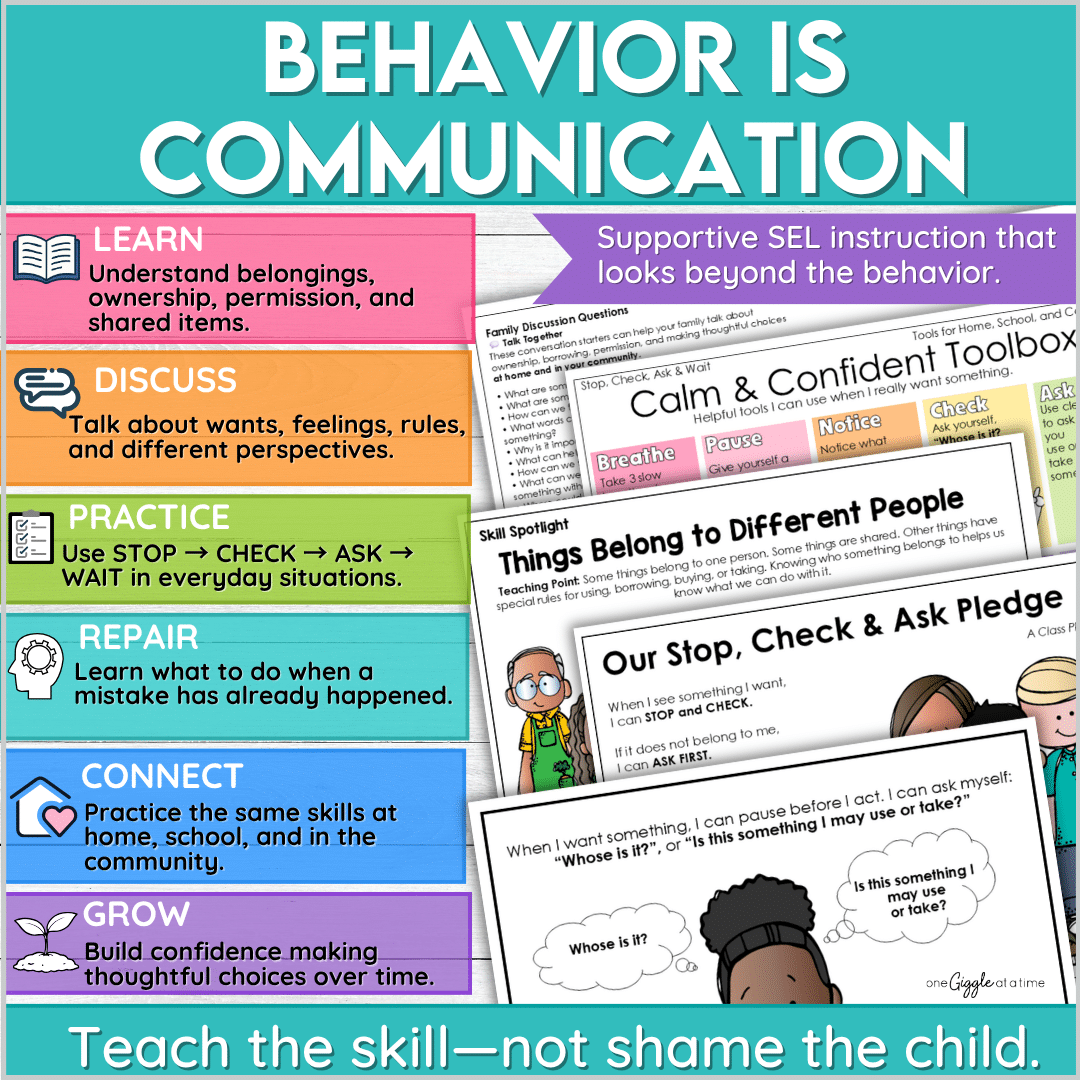
Help children learn to respect belongings, ask before using something, wait for an answer, and make it right when a mistake happens with this comprehensive social story and SEL toolkit.
Taking Things That Don’t Belong to Me is a completely refreshed and expanded resource designed to teach the skills behind thoughtful choices—not simply tell children, “Don’t take things.”
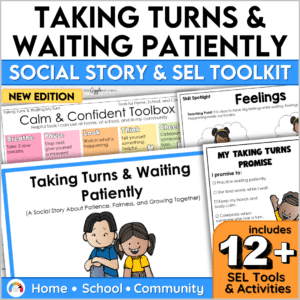
This updated edition includes a child-friendly social story, SEL teaching cards, discussion activities, visual supports, practice scenarios, problem-solving tools, reflection activities, family resources, poetry connections, a social skills reader, and more.
🌱 Why This Resource Was Refreshed
Children may take, touch, borrow, move, or use something that does not belong to them for many different reasons. A child may not know who an item belongs to. They may misunderstand whether something is shared. They may really want to see or use it. They may act before remembering to ask. Or they may understand the expectation and still need more practice using the skill in the moment.
That is why this new edition moves beyond a simple “taking things is wrong” message.
Instead, children are given clear, concrete skills they can practice:
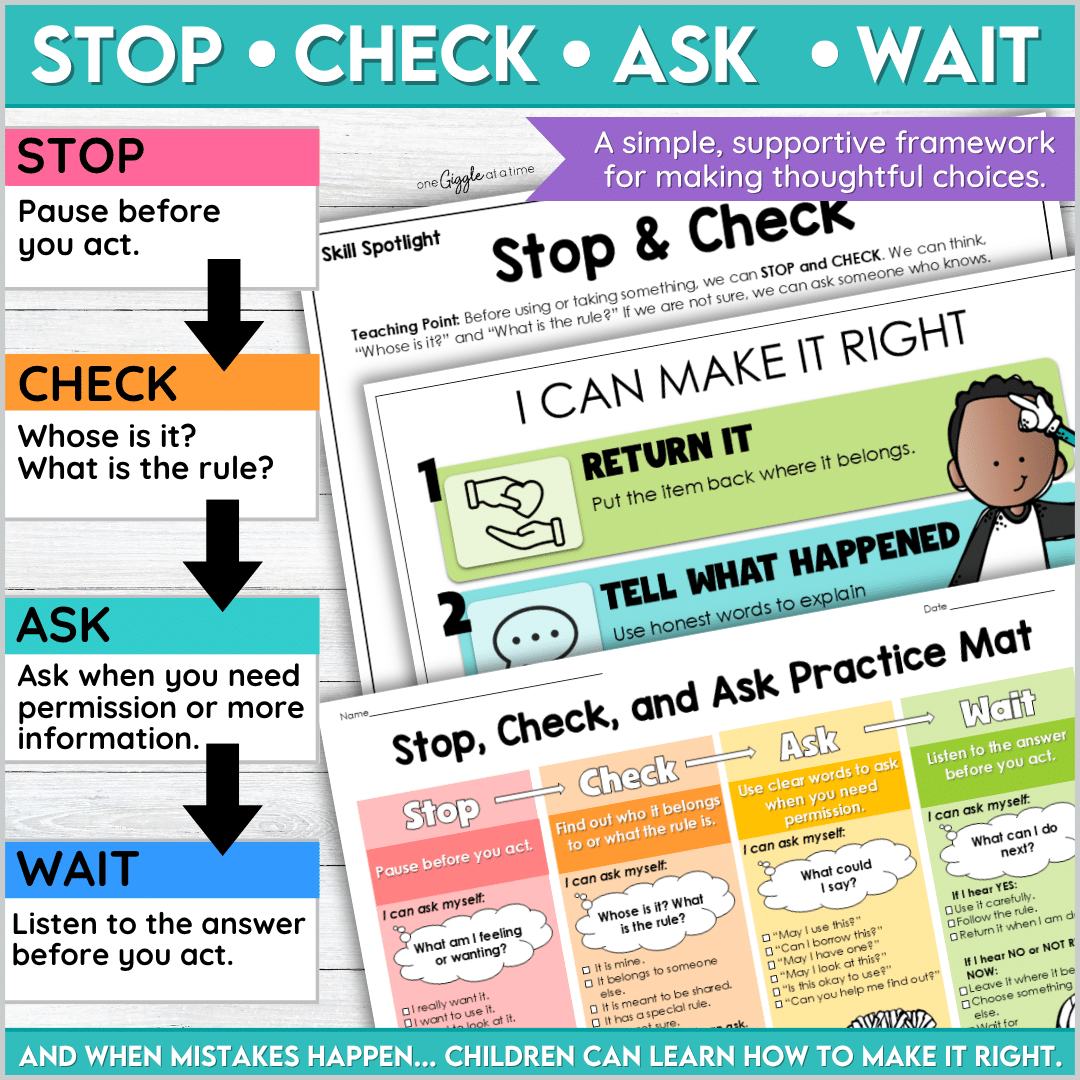
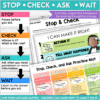
STOP → CHECK → ASK → WAIT
They learn to pause, find out who an item belongs to or what the rule is, ask when permission is needed, and wait for the answer before acting.
And because children are still learning, the resource also teaches an important message:
Mistakes can be made right.
Rather than using shame or labels, children learn ways to return an item, tell what happened, repair the situation, and think about what they might do next time.
⭐ A Supportive, Neurodiversity-Affirming Approach
This updated resource is designed around the idea that behavior is an opportunity for teaching, communication, and skill building.
It does not assume why a child took or used something. It does not label a child as “good,” “bad,” dishonest, or a “stealer.” Instead, adults are encouraged to get curious, provide clear information, teach missing skills, and help children repair situations when needed.
Children learn that wanting something is okay. Feelings, interests, and impulses are not treated as misbehavior. The focus is on what a child can do with those feelings and wants while also respecting other people’s belongings, boundaries, and answers.
This approach supports self-awareness, communication, perspective-taking, self-advocacy, problem-solving, responsibility, and relationship skills.
💡 Children Learn To:
- Understand the difference between their belongings, someone else’s belongings, and shared items
- Pause before touching, taking, borrowing, moving, or using something
- Check who an item belongs to and what the rule is
- Use clear words to ask for permission
- Understand that asking does not always mean the answer will be yes
- Wait for and respect the answer
- Ask for help when they are unsure
- Think about another person’s perspective
- Use strategies when waiting or hearing “not right now” feels difficult
- Recognize what they can do after making a mistake
- Make it right without shame
- Practice making thoughtful choices at school, at home, and in the community
🧠 More Than a Social Story
Children often need more than one conversation to turn an idea into a skill they can use independently.
This toolkit provides multiple ways to read, discuss, practice, reflect, connect, and grow.
Children can learn the concept through the social story, talk about different situations, use visuals to remember the steps, practice with realistic scenarios, reflect on their choices, and continue learning at home.
The goal is not perfect behavior.
The goal is helping children build a flexible internal question:
“This looks interesting. What can I do before I use it?”
Over time, repeated practice can help STOP → CHECK → ASK → WAIT become a familiar routine children can use across settings.
📚 What’s Included?
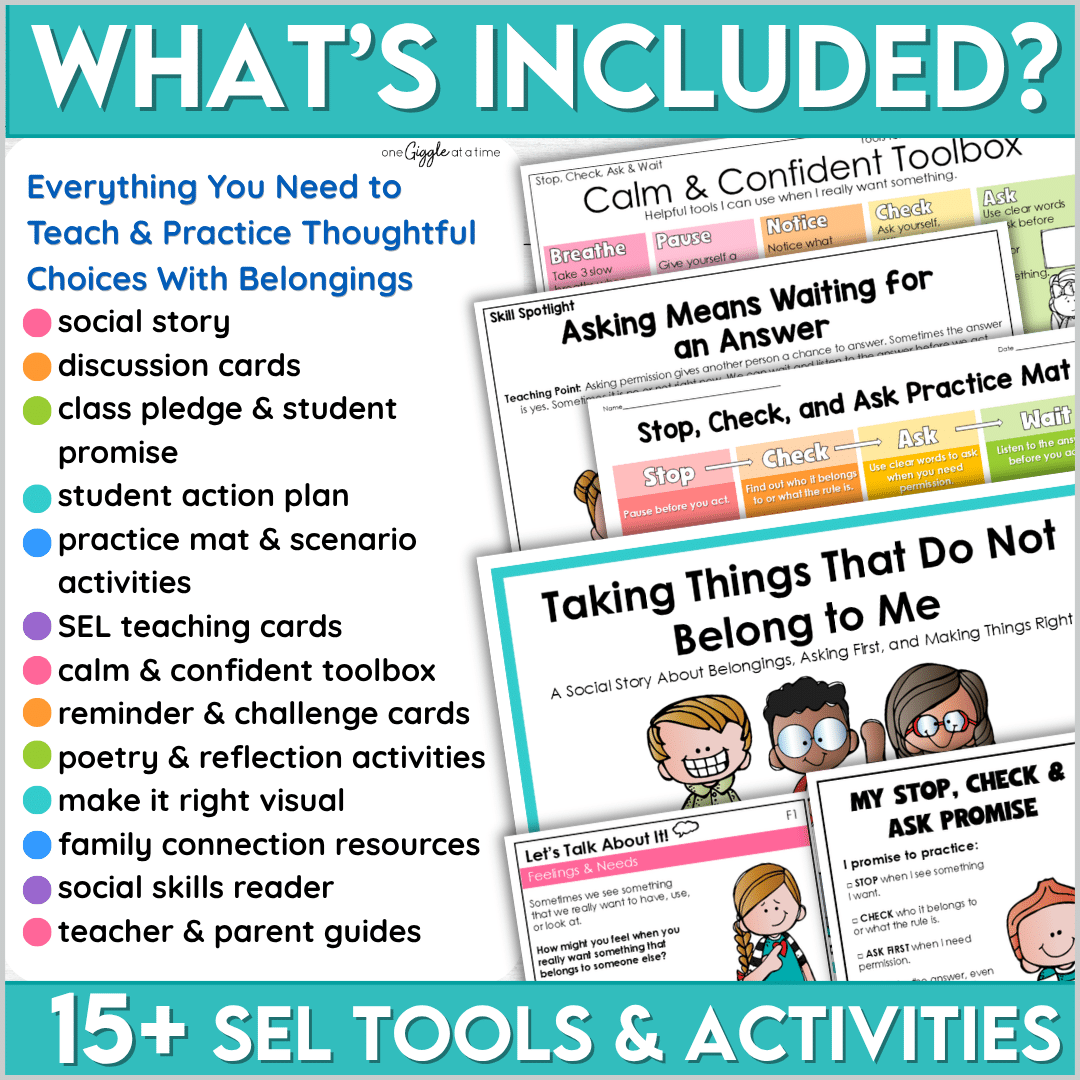
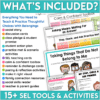
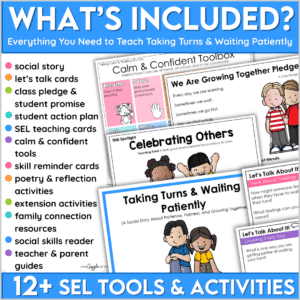
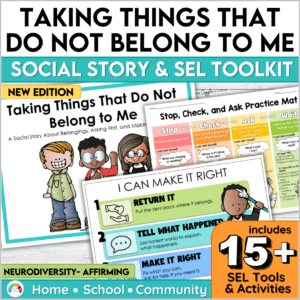
This expanded Social Story & SEL Toolkit includes 15+ tools and activities, including:
- Taking Things That Do Not Belong to Me Social Story
- Social story discussion and reflection supports
- STOP → CHECK → ASK → WAIT visual framework
- SEL skill teaching cards
- “Let’s Talk About It!” discussion cards
- I Can Make It Right visual
- Adult guide for supporting repair
- Thoughtful-choice practice activities and scenarios
- Practice mat
- Calm and confident coping tools
- Skills reminder and challenge cards
- Class pledge and student promise
- Poetry recitation and reflection activities
- Social Skills Reader
- Family connection resources
- Take-home activities
- Teacher/parent guides
- Additional opportunities for guided and independent practice
- Bonus link to narrated video of social story included
🏠 Use the Skills Across Settings
The language and visuals are designed to help children practice the same core skills in different environments.
At school, children can practice with classroom supplies, shared materials, classmates’ belongings, centers, desks, and other everyday situations.
At home, children can practice with siblings’ belongings, family items, electronics, snacks, toys, and other household materials.
In the community, children can practice recognizing that stores, libraries, friends’ homes, playgrounds, activities, and other places may have different expectations about what can be touched or used.
The consistent framework helps children learn that the details may change, but they can still stop, check, ask, and wait.
👩🏫 Great For:
Elementary classrooms, special education, school counseling, SEL lessons, behavior support, intervention groups, social skills groups, homeschool, family support, and individual instruction.
This resource may be especially helpful when teaching about:
taking things • stealing • borrowing • asking permission • respecting belongings • personal property • classroom materials • boundaries • impulse control • waiting • accepting no • making good choices • making amends • repairing mistakes • problem solving • social skills • behavior skills • SEL
🌈 A New Edition With a New Focus
If you have used an earlier version of this resource, you will notice that this edition is more than a visual update.
The refreshed resource expands the lesson from:
“I should not take things that aren’t mine.”
to:
“I can understand belongings. I can pause. I can ask. I can wait. And if I make a mistake, I can make it right.”
That shift is intentional.
Children deserve clear expectations and the tools needed to meet them. This updated edition combines both—helping adults teach respectful boundaries while giving children concrete, supportive skills they can carry into everyday life.
Growing Every Day. 🌱
Only logged in customers who have purchased this product may write a review.




Reviews
There are no reviews yet.