





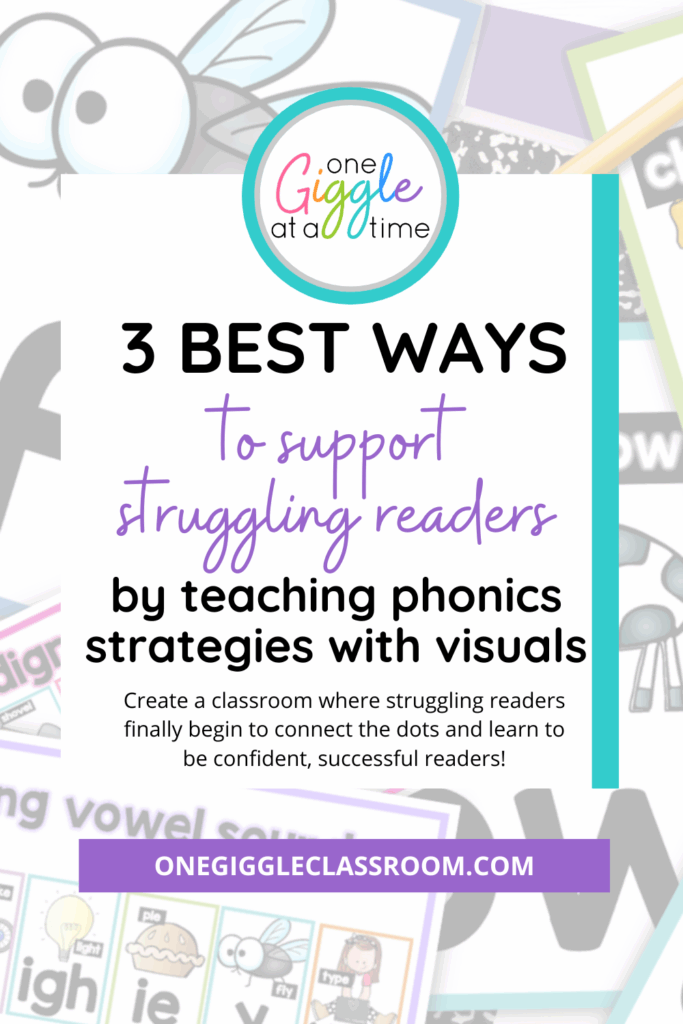
3 Best Ways to Support Struggling Readers by Teaching Phonics Strategies with Visuals
Share This:

Teaching phonics strategies can be one of the most powerful ways you support young readers in your classroom, especially the ones who struggle! If you’ve been an elementary teacher for any length of time, you’ve likely had students who just don’t seem to “catch on” to phonics the same way others do. This doesn’t mean you’re a bad teacher or your students will never learn— it just means you need to adjust. When you combine explicit phonics instruction with consistent visual support, you create a classroom where struggling readers finally begin to connect the dots and learn to be confident, successful readers!
Why Some Students Struggle with Reading (& What They Really Need)
Reading just doesn’t come naturally for all children. Some kids quickly learn how to decode, while others need more intentional support to understand letter-sound relationships, spelling patterns, and how to blend and segment words.
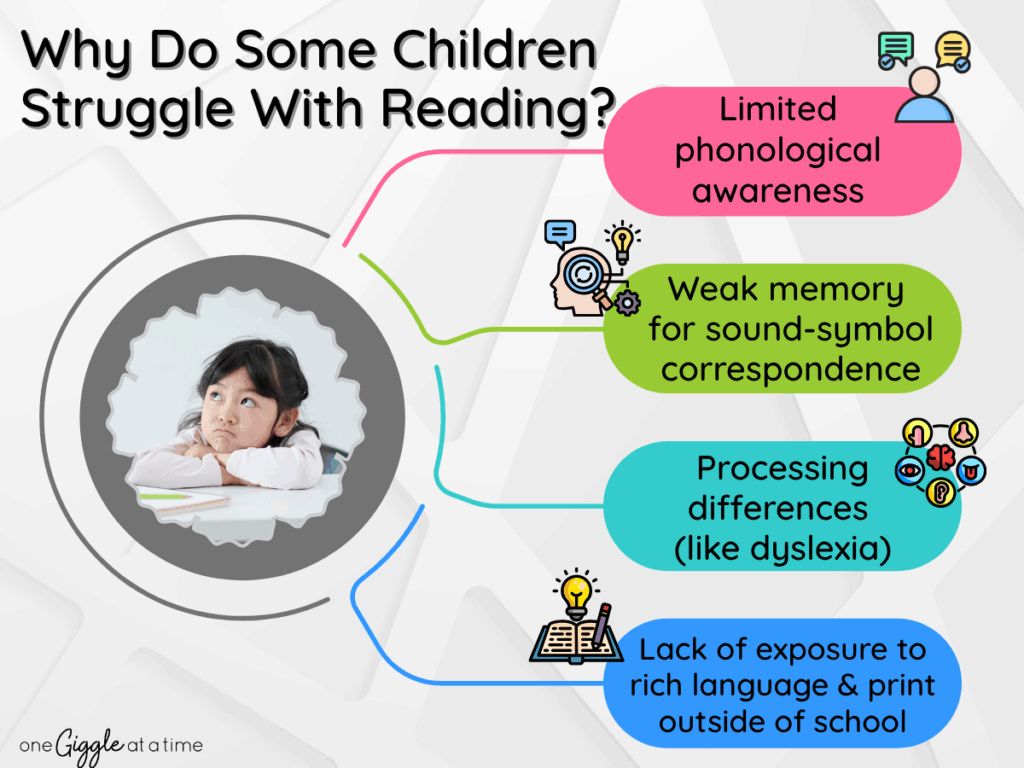
These reading struggles can stem from:
- Limited phonological awareness
- Weak memory for sound-symbol correspondence
- Processing differences (like dyslexia)
- Lack of exposure to rich language and print outside of school
For struggling readers, listening to you teach a lesson isn’t often enough. They need repetition, multisensory input, and lots of visuals that help create a firm foundation for new learning.
This is where teaching phonics strategies with visuals becomes a game-changer! When students begin to see the sounds, patterns, and rules they are learning, it helps their brains make stronger connections— and ones that truly stick!
1. Make Visuals Part of Your Daily Routine
When you’re working with struggling readers, repetition is crucial! Repetitive learning doesn’t need to be boring, though. Visual tools like posters and flashcards offer consistent, kid-friendly reminders of the phonics skills you are teaching in your classroom.

The Phonics Intervention & Review Resource includes everything you need to provide this visual support for your students!
It includes 554 high-impact visual cards for all of these important phonics skills:
- Vowel teams
- Consonant digraphs and blends
- Hard and soft C & G
- Vowel & schwa sounds
- Double consonants
- Word families
- Final stable syllables
- Split vowel digraphs (silent e)
- Vowel digraph & diphthong sounds
- R-controlled vowels
- Prefixes & suffixes
Instead of having students rely solely on verbal instruction, you’re giving them clear and accessible content to refer back to each day.

Print these visuals as full-sized posters AND matching flashcards for students to reference on their own.
Use the visuals for:
- Your classroom bulletin board
- Whole group instruction
- Small group instruction
- Individual instruction & work
- Take-home review
By weaving visuals into your daily routine, you build familiarity and independence for all of your students!

2. Teach Phonics Strategies in a Multisensory Way
Next, incorporate visuals into your multisensory teaching.
You already know how powerful it is to combine sight, sound, and movement for learning. Your visuals can amplify this even more!

When you’re teaching phonics strategies, try pairing visuals with:
- Sound practice- saying it out loud
- Movement- drawing the letters in the air or completing a related motion
- Writing- using dry-erase markers or magnetic letters on laminated visual cards
How This Works is Real Life with SH
When teaching the digraph sh, show your students the visual card, demonstrate moving your arms out into the air while saying the sound together, and then have students draw the digraph in the air.
Seeing, hearing, saying, and writing all work together to strengthen learning!
3. Use Visuals to Build Reading Confidence
Finally, you can use visuals to build confidence in your struggling readers.
These students often doubt themselves and get frustrated when words don’t make sense or decoding feels like guesswork. When you give them the right tools— especially amazing visuals— they begin to feel more in control.
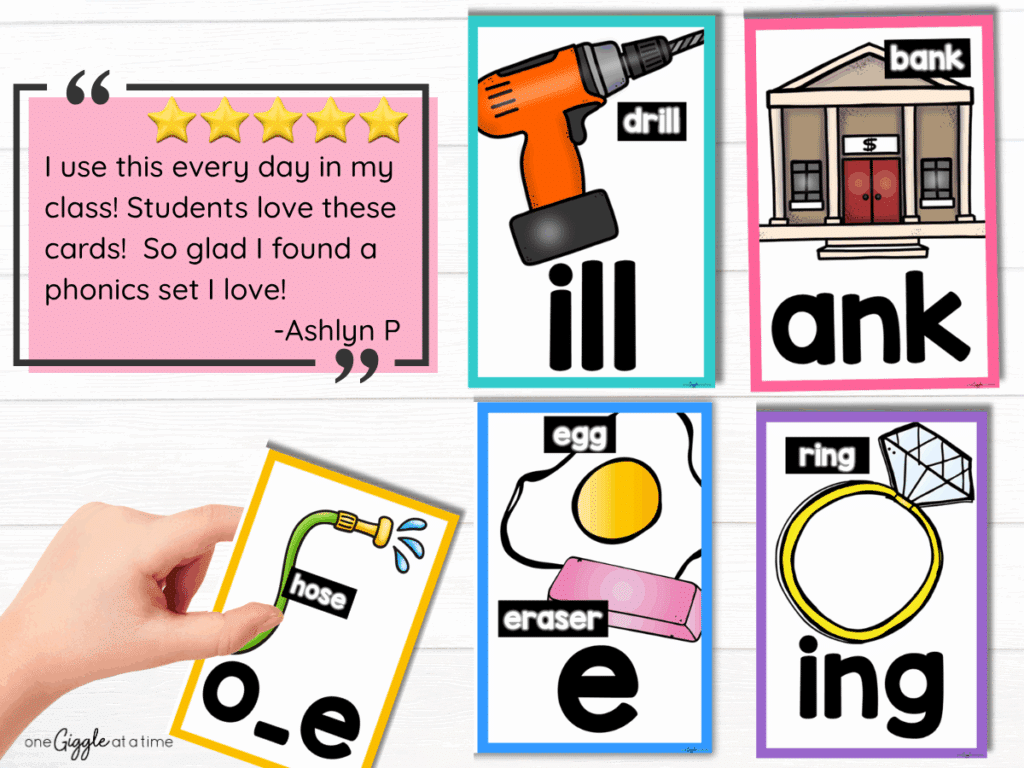
Teaching phonics strategies visually gives your students access to the content in a way that feels less overwhelming and more understandable. Instead of relying on memorization alone, they have tangible, consistent clues right in front of them all of the time!
How To Promote Independence
Consider creating a “Phonics Helper Wall” in your classroom or a desk ring with individual student reference charts. These encourage students to check their resources before asking you or a friend for help.

Over time, you’ll see:
- Greater independence
- Fewer decoding mistakes
- Greater spelling accuracy
- & Increased motivation
When students feel successful, even through baby steps, their confidence grows— and so does their love for reading!
You CAN Help Struggling Readers Succeed!
By teaching phonics strategies with visuals, you empower your struggling readers with tools they can use again and again. Visuals make abstract sounds and rules memorable and easier to understand.
Don’t wait to make this shift. Grab the Phonics Intervention & Review Resource and start implementing these strategies right away! You’re not just teaching reading this year. You’re building confident readers— one sound, one visual, and one giggle at a time!
Let me know if you have any questions about anything you see here. Don’t forget to pin this post to refer to it later!
Other posts you may enjoy:
6 ENGAGING Activities to Build Strong Vocabulary in Elementary-Aged Students
Motivation Series Part 1: How to Motivate Students in Your Primary Classroom
Motivation Series Part 2: 10 Fun & Effective Ways to Motivate Your Students
MAKE COMPREHENSION INTERACTIVE AND FUN!
Retelling Bookmarks
This FREEBIE is going to change the way your students spend their “after reading” time!


Diane Romo
I’m so glad you’re here! I share practical ideas and ready-to-use resources for teachers, parents, homeschoolers, and counselors who want to foster strong relationships and inspire meaningful learning. If you support kids, this space is for you.