





`Teaching Flexibility and Cooperation: 6 Useful Friendship Strategies for Kids
Share This:
Friendships are a big part of childhood, but they are also where many social challenges first appear. Disagreements about games, wanting to be in charge, or needing personal space are all normal parts of growing up with friends. That’s why teaching cooperation, understanding the importance of cooperation during childhood, and intentionally teaching flexibility are essential for kids! Whether you’re a classroom teacher, homeschool parent, or school counselor, helping children learn how to navigate these moments will equip them to build stronger friendships and become more confident.
Welcome to the Friendship Series!
Today’s post is Part 2 of the Friendship Series—all about teaching flexibility and cooperation!
In Part 1, you can find practical information about feeling left out and social changes in childhood friendships.
Let’s dive right in to Part 2:
Why Cooperation and Flexibility Matter in Friendship
From a child’s perspective, friendship sounds so simple— play together and have fun. But real friendships require so much more than that. Kids have to learn how to share ideas, accept differences, and work through disagreements with their peers.
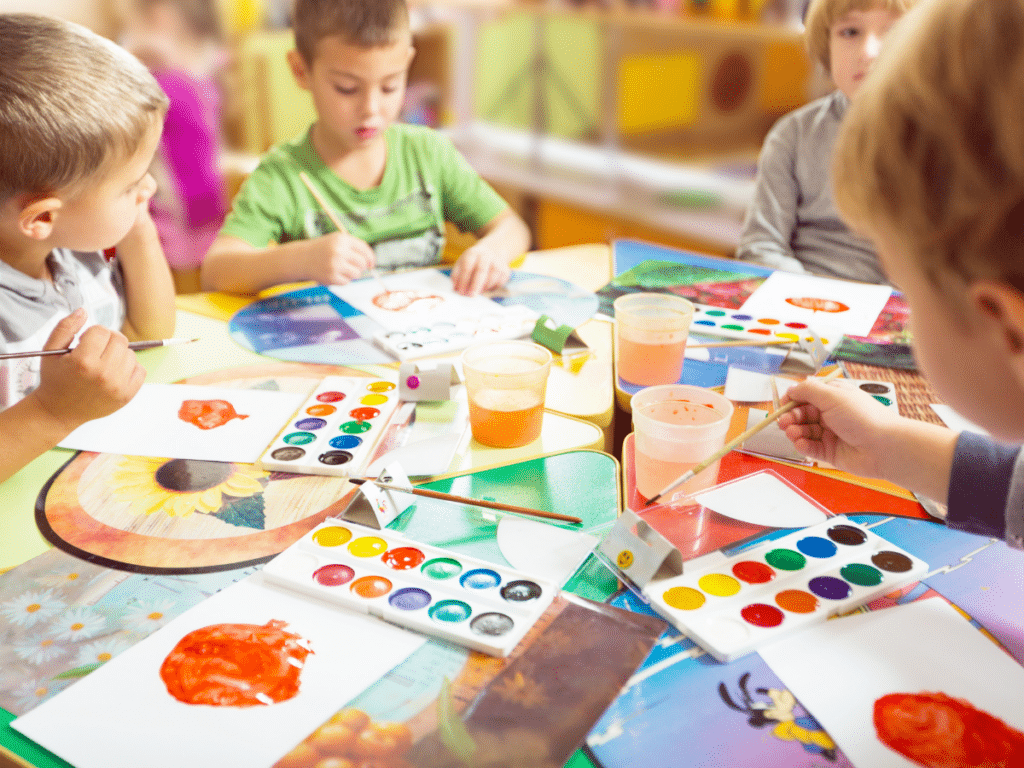
That’s where the importance of cooperation in school becomes clear. Kids are constantly navigating shared spaces— learning centers, playground games, or homeschool co-op activities. Without cooperation and flexibility, these moments can QUICKLY turn into arguments or hurt feelings.
Common situations you might see:
- Little ones arguing over which game to play
- One child insists on being the leader every time
- A child becomes upset when a friend wants to do something different
- Someone needing space but not knowing how to respectfully say so
These aren’t signs that something is wrong. These are great opportunities for teaching cooperation and helping little ones practice flexible thinking!
When you begin to see these moments as learning opportunities, children start to understand that friendships work best when everyone’s ideas are heard and respected.

Using Social Stories as Proactive Teaching Tools
One of the most effective ways to support children’s friendship skills is to teach them BEFORE problems occur.
The Cooperation & Flexibility Mini Bundle includes three social stories designed to support these specific skills:
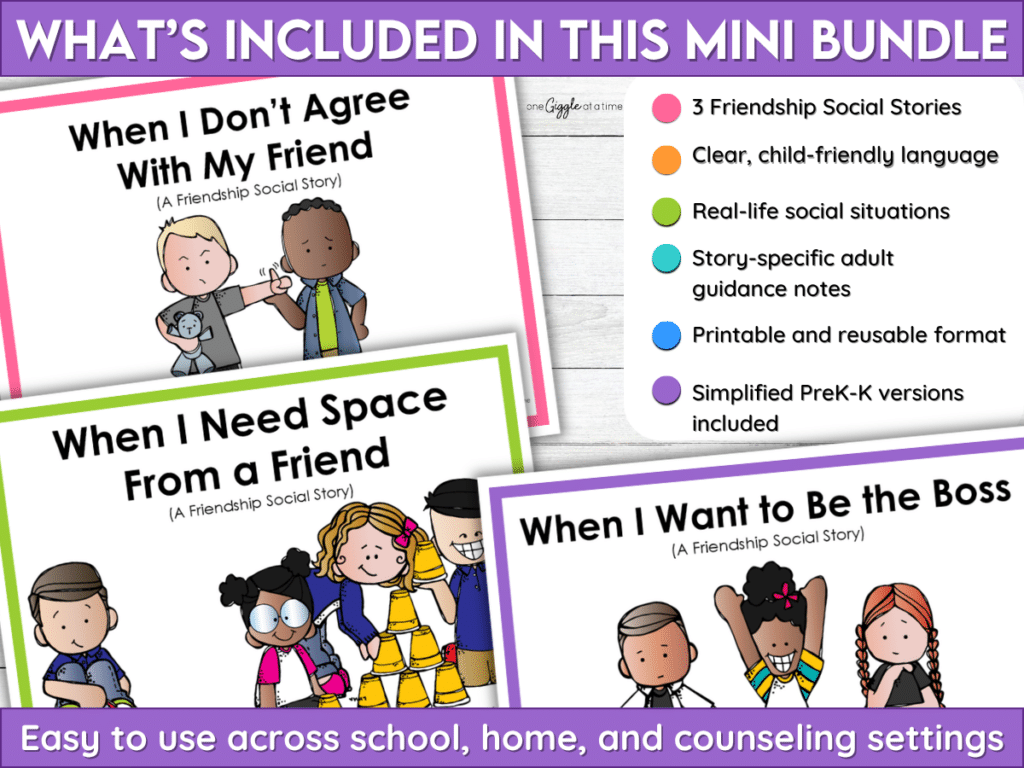
Use these stories in classroom SEL lessons, counseling sessions, social skills groups, or homeschool co-ops. Read these stories proactively, then revisit them when challenges arise.
You can find these social stories and many more in the Friendship SEL Kit!
Teaching Flexibility During Arguments
Disagreements are one of the most common parts of friendship challenges for young children. One child wants to play pirates outside while another wants to play tag, and frustration heats up so quickly!
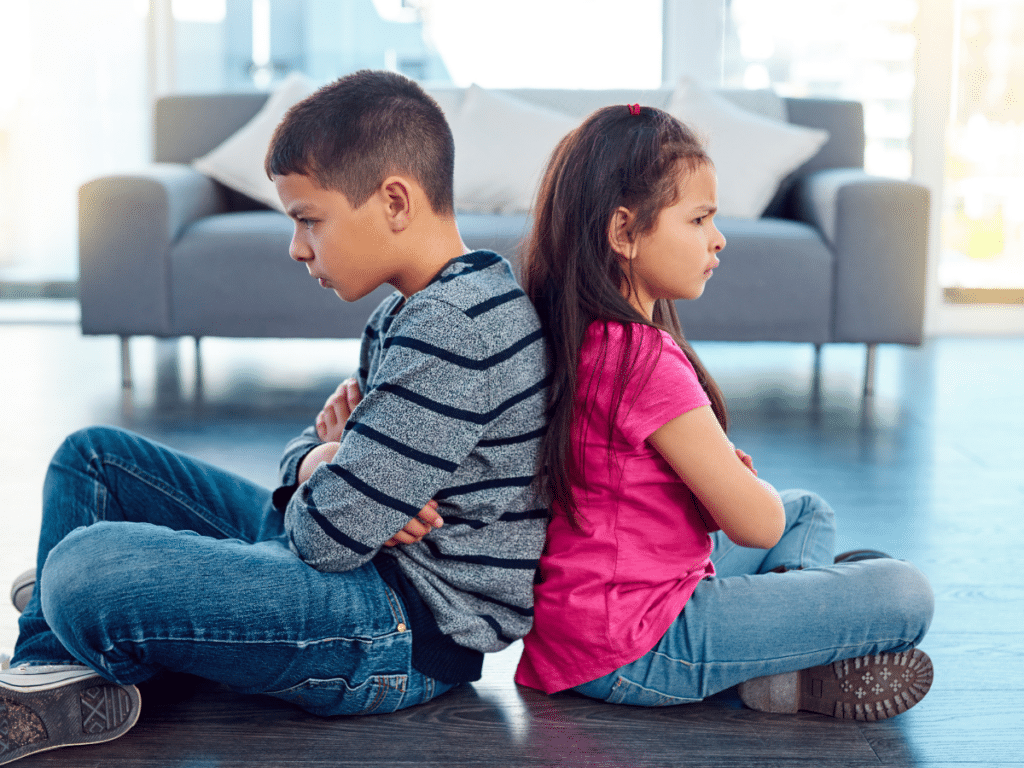
Helping kids learn to be flexible is a key piece in staying friends when things heat up.
Flexibility helps them learn that it’s okay if things don’t always go their way. Different ideas are normal in friendships!
Model and practice flexible language when disagreements pop up:
- “Let’s hear both ideas.”
- “What could we try that works for both of you?”
- “Maybe we can take turns choosing.”
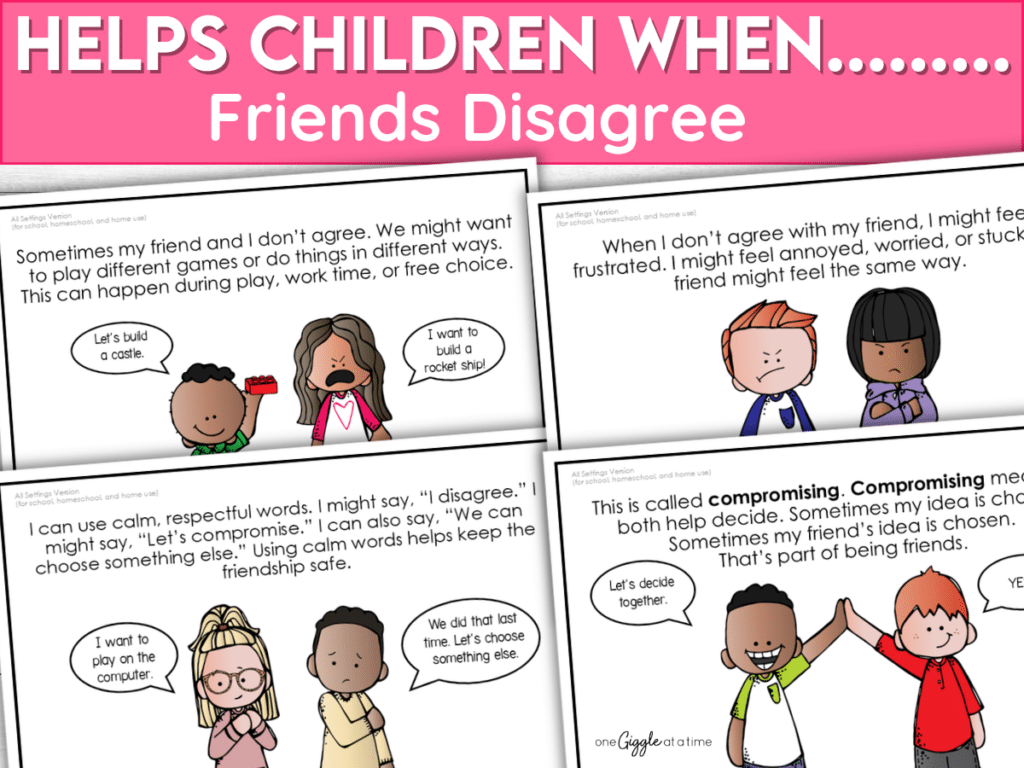
For many children, flexibility needs to be taught and practiced explicitly. The social story “When I Don’t Agree With My Friend” helps kids understand that friends can have different ideas—and that working through those differences is an important part of friendship. This story shows children what flexible thinking looks like in real-life situations!
When Kids Want to Be the Boss
Another common challenge in childhood friendships is control. Some kids always want to be in charge, while others feel aggravated when they’re told what to do.
You might hear things like:
- “We are playing it MY way.”
- “You’re not playing the game right.”
- “I’m the boss!”
These situations are the perfect opportunity to talk about the importance of cooperation in school and how friendships work best when everyone has a voice.

Teaching cooperation and flexibility to kids who want to be the boss can include:
- Talking about the importance of listening to others’ ideas and shared decision-making.
- Practicing taking turns being the leader.
- Using the social story “When I Want to Be the Boss” to give children real-life examples of how to respond when they always want to lead.
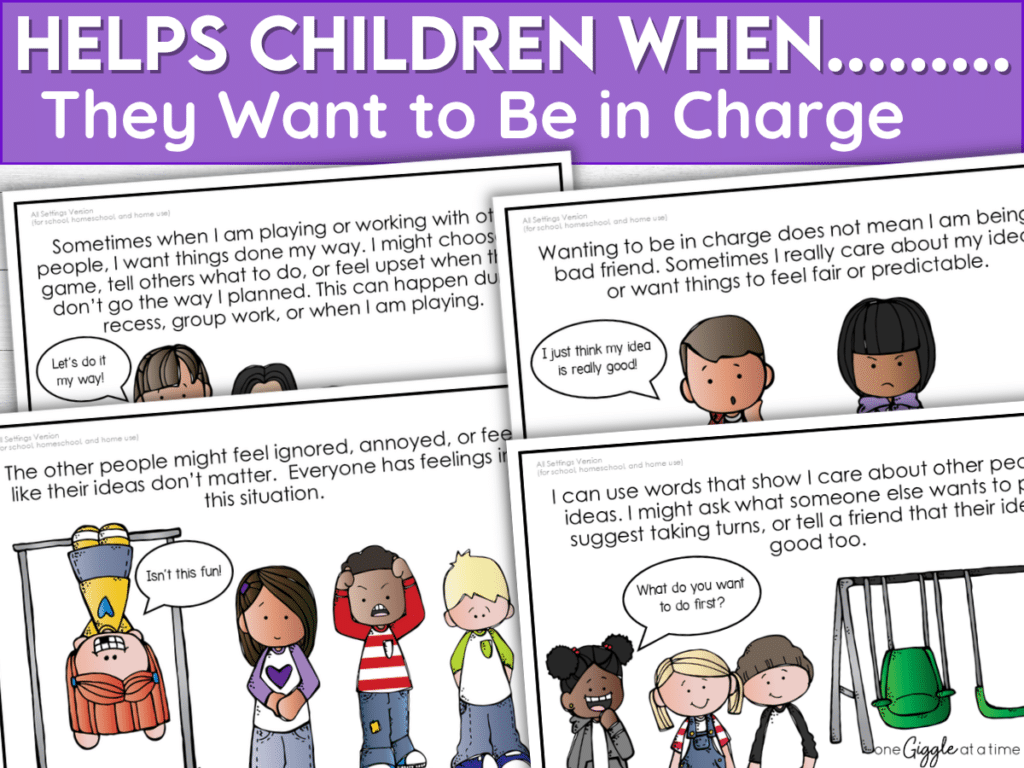
Using these proactive strategies to teach positive friendship skills feels supportive instead of corrective.
Teaching Flexibility Around Personal Boundaries
Finally, friendship doesn’t only involve playing together— it includes understanding when someone needs space.
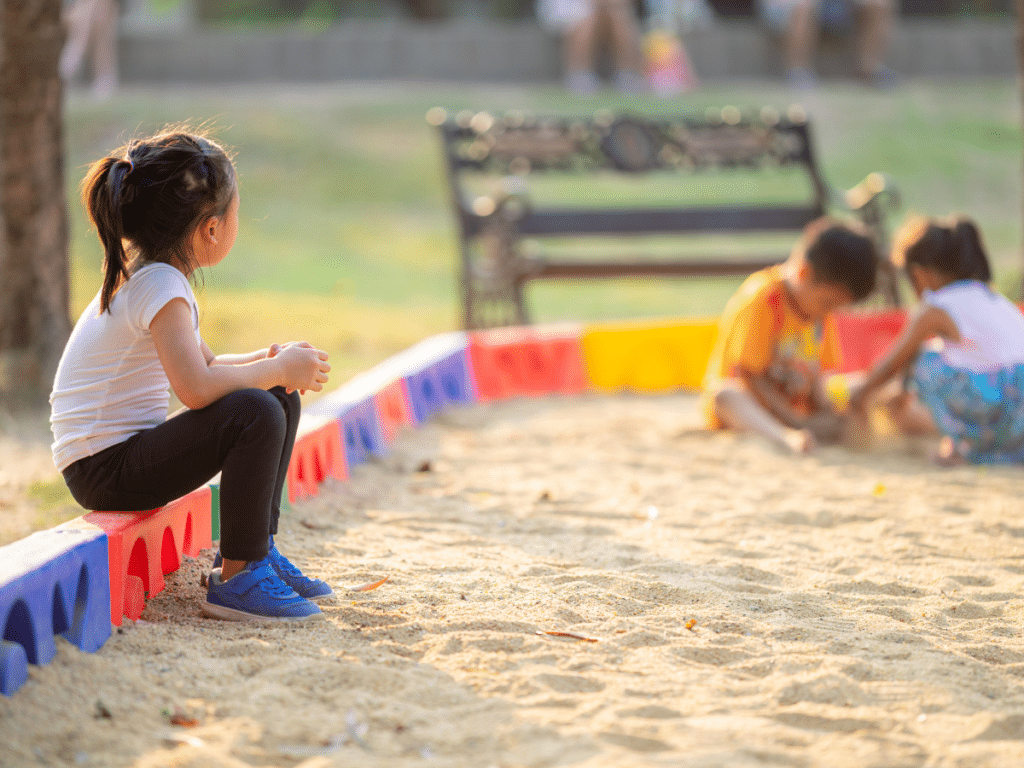
This concept is hard for some kids to understand. They may follow a friend around constantly, interrupt play often, or become upset when someone asks for time alone.
This is another time when teaching flexibility is important. Kids learn that friendships are stronger when everyone’s needs are respected!
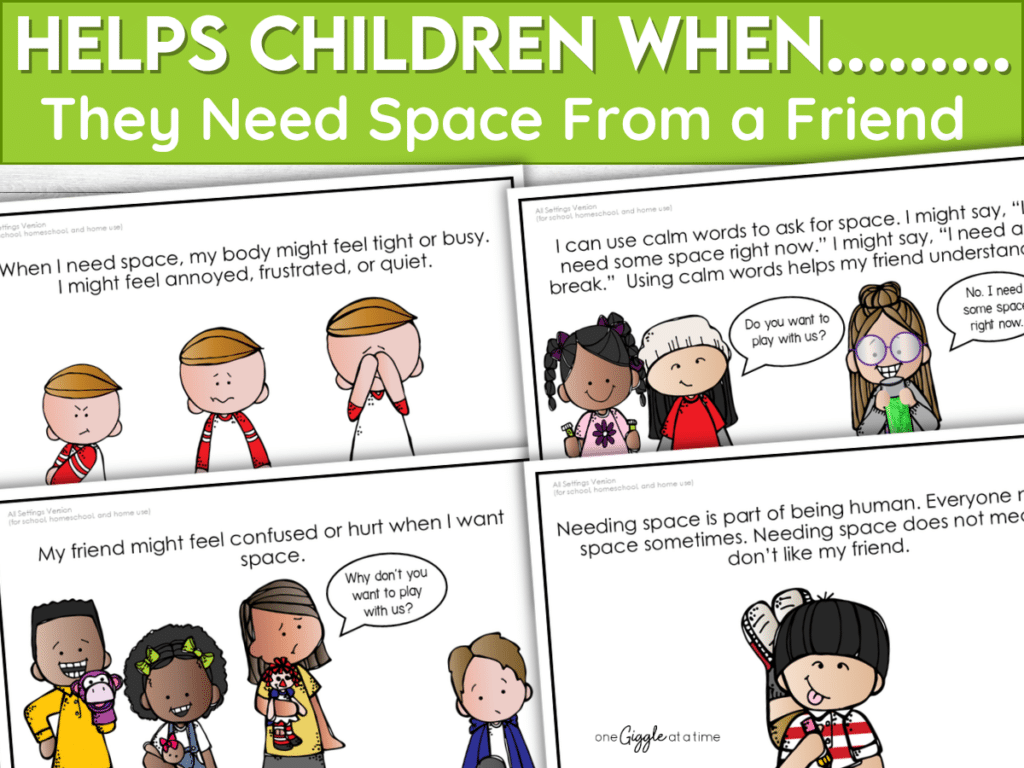
The social story “When I Need Space From a Friend” introduces this idea in a kid-friendly way. Children learn how to ask for space kindly AND how to respond respectfully when a friend needs space.
Friendships become calmer and more positive when kids understand that boundaries are a part of friendships.
Quick Support in the Heated Moments
Are you still not confident in how to help when kids around you have conflicts? Use this freebie to help you know exactly what to say to kids during friendship conflicts!
It gives you simple, dependable language to validate their feelings while guiding them toward problem-solving and next steps.
Come Back for More!
The Friendship Series isn’t over yet! Stay tuned for the next two segments to learn even more practical ways to support positive friendships between the children around you.
Part 3: Big Feelings & Reactions
Part 4: Friendship Repair
Don’t forget to check out the full Friendship SEL Kit, too!
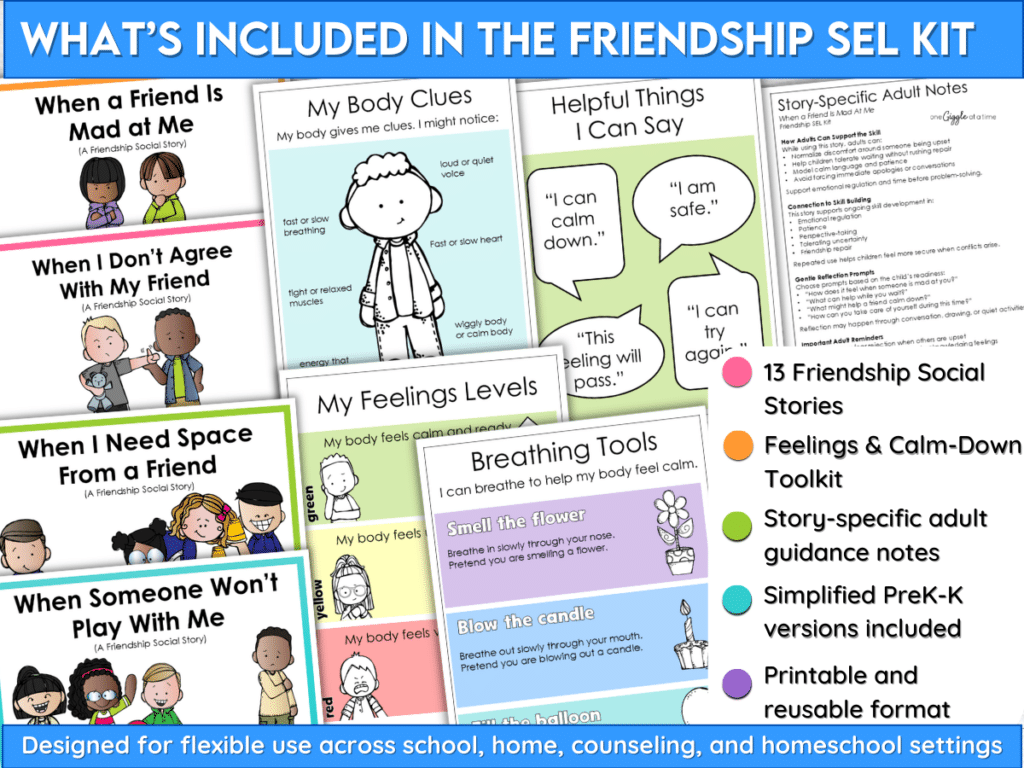
Friendships are one of the most important places where kids learn social and emotional skills. By intentionally teaching cooperation, reinforcing the importance of cooperation in school, and consistently teaching flexibility, you help them build friendships that are respectful, resilient, and supportive. With your support, friendships will grow stronger one interaction at a time!
Let me know if you have any questions about anything you see here. Don’t forget to pin this post to refer to it later!
Other posts you may enjoy:
Getting Ready for Kindergarten: 5 Benefits of Building Social Emotional Skills
EASY Action Steps to Strengthen Executive Functioning Skills in Children
The Importance of Teaching Emotional Awareness to Kids: Emotional Regulation Series Part 7
GUIDE STUDENTS IN DEVELOPING A GROWTH MINDSET WITH THESE
Free Growth Mindset Punch Cards
The perfect way to start meaningful habits and conversations with your students!


Diane Romo
I’m so glad you’re here! I share practical ideas and ready-to-use resources for teachers, parents, homeschoolers, and counselors who want to foster strong relationships and inspire meaningful learning. If you support kids, this space is for you.