





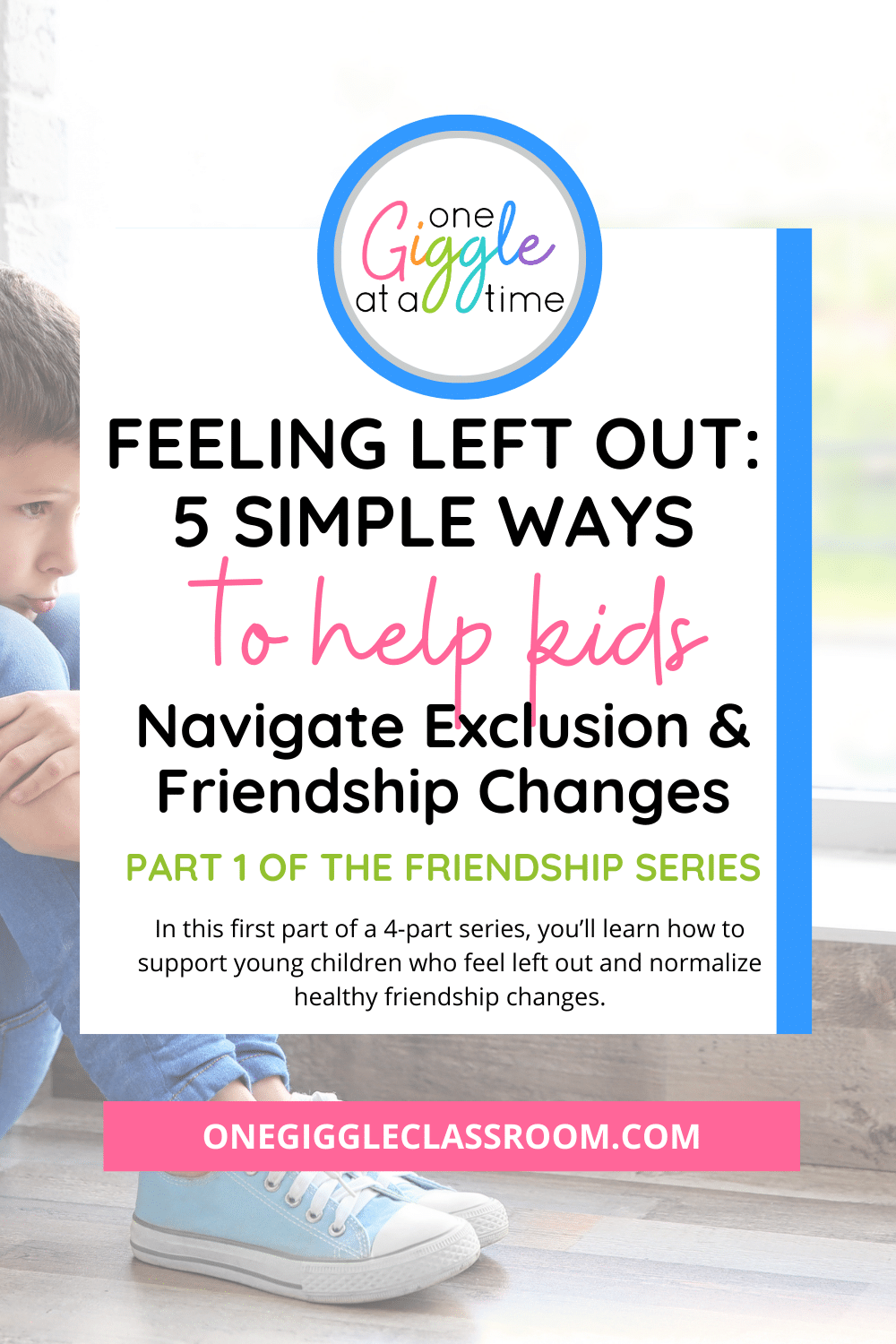
Feeling Left Out: 5 Simple Ways to Help Kids Navigate Exclusion & Friendship Changes
Share This:

Friendship with young children can feel joyful and complicated—all in the same day! You watch students laugh together, then only moments later, someone is in tears because of feeling left out, or a child being excluded by friends. In early years, friendship changes happen quickly, and this can feel overwhelming for many little ones. In this first part of a 4-part series on Friendship, you’ll learn how to support young children who feel left out and normalize healthy friendship changes so everyone feels a strong sense of belonging in friend groups at school or home!
Understanding Feeling Left Out in Early Childhood Friend Groups
You see “feeling left out” in lots of different ways in early childhood. A student stands on the edge of the playground during recess. A child in your homeschool group whispers, “They won’t let me play.” A school counseling session reveals worries about a child being excluded by friends. Even in smaller homeschool environments, friendship changes can feel just as intense as they do in a busy elementary classroom.

At this stage, kids are still learning that:
- Friendship changes don’t mean they are rejected forever
- Exclusion from one friend or group doesn’t mean they will be from everyone else, too
- Feeling left out hurts, but it doesn’t define their identity
No matter the environment, your response shapes how children interpret “feeling left out”.
When you respond with calmness and intentionality, you turn moments of exclusion into meaningful teaching opportunities!
Why Friendship Changes Feel So Big to Young Children
Little ones usually think about everything in life as absolute. Just one disagreement can feel like the end of a friendship. When friendship changes happen— like a favorite partner choosing someone new— it can quickly lead to someone feeling left out.
Common Reactions to Look Out for:
- Big emotional responses to small social shifts
- Repeated concerns about a child being excluded by friends
- Comments like “Nobody likes me.”
- Avoidance of group activities after feeling left out

These reactions are all developmentally appropriate in early childhood. Kids learn about their identity, preferences, and group dynamics in school classrooms, clubs, homeschool co-ops, and extracurricular activities. It’s normal for social circles to shift as children grow. Still, without guidance from adults who care—like you— normal friendship changes can turn into ongoing patterns of exclusion.
Friendship Truths to Teach Kids:
- Friendship changes happen all throughout life.
- You can always try again or find new friends.
- Feeling left out is only temporary, even when it feels like it will be forever.
When you consistently teach and remind little ones these truths, you reduce sadness and shame and increase resilience and flexibility!
What to Say When a Child is Being Excluded by Friends
When you support a child who feels left out, your words matter so much. Long lectures aren’t needed during recess, co-op play, or a counseling check-in. You need simple, dependable language that validates their feelings while guiding them to problem-solving and next steps.
Use this freebie to help you know exactly what to say to kids during friendship conflicts!
5 Proactive Ways to Reduce Feeling Left Out and Build Belonging
Prevent repeated cycles of a child feeling left out by using social stories and intentionally creating systems that build belonging among kids.
1. Teach About Friendship Changes Through Social Stories
Children also benefit from structured, repetitive teaching about friendship changes. Social stories provide clarity when these moments feel overwhelming to little ones.

TheFeeling Left Out Mini Bundle directly addresses exclusion and social changes. It includes 4 different social stories to target specific friendship challenges:
- When I Feel Left Out
- When Someone Won’t Play With Me
- When a Friendship Changes
- When a Friend is Mad at Me
Use these social stories during elementary classroom morning meetings, small group counseling sessions, homeschool SEL lessons, or co-op circle time. These stories are also great to use individually after a child experiences exclusion or a change in friendships.
2. Rotate Partners and Groups
In classrooms and co-ops, ensure children rotate partners and groups so friendship changes feel normal.
Use these fun partner pairing cards for a fun twist!

3. Clearly Teach Entry Skills
Also, model and practice friendship entry skills together:
- “Can I have a turn next?”
- “What are you playing?”
- “Can I play, too?”
These social phrases help reduce feelings of exclusion and encourage a sense of belonging.
4. Normalize Having Multiple Friendships
Teach children that they can have many friends across different settings. When they begin to understand this, they are less likely to feel anxious about meeting new people and forming new friendships.

5. Create Opportunities to Reflect
Finally, to help kids feel they belong rather than feel left out, create opportunities for reflection. A calm-down corner or space is a meaningful option for elementary classrooms and homeschool settings. In counseling sessions, role-play with your student to help them feel prepared for future situations.
Reflection helps children recover from feelings of being left out more quickly.
*Find everything you need for a calm-down space PLUS the Feeling Left Out Mini Bundle (and more!) in the Friendship SEL Kit!
Come Back for More of the Friendship Series!
Feeling left out and experiencing social changes are only one piece of the friendship puzzle in early childhood years. Stay tuned for the upcoming parts in this four-part series:
- Part 2: Cooperation & Flexibility
- Part 3: Big Feelings & Reactions
- Part 4: Friendship Repair
Each part of this series builds on the last, giving you easy-to-follow ideas for teaching your children to manage friendship conflicts.
Can’t Wait? Look Ahead to the Friendship SEL Kit!
If you can’t wait for the rest of the Friendship Series, go ahead and check out the Friendship SEL Kit. In it, you’ll find 13 social stories and an exclusive Feelings & Calm Down Toolkit to help you support your children in building and repairing friendships.

When you intentionally support children who feel left out and help them navigate friendships, you are teaching them to become resilient and flexible in the classroom and homeschool groups. You show them how to turn painful moments into powerful learning opportunities. With your steady guidance and consistent language, you create environments where every child truly feels he belongs and can handle friendship changes with confidence!
Let me know if you have any questions about anything you see here. Don’t forget to pin this post to refer to it later!

Other posts you may enjoy:
3 Powerful Strategies for Teaching Kindness at Home & in the Classroom
Morning Meeting: The Secret to Building Community in the Classroom in 3 Easy Steps
Why Teaching Social-Emotional Learning Has a Huge Impact on Students Today
GUIDE STUDENTS IN DEVELOPING A GROWTH MINDSET WITH THESE
Free Growth Mindset Punch Cards
The perfect way to start meaningful habits and conversations with your students!


Diane Romo
I’m so glad you’re here! I share practical ideas and ready-to-use resources for teachers, parents, homeschoolers, and counselors who want to foster strong relationships and inspire meaningful learning. If you support kids, this space is for you.