





3 Powerful Strategies for Teaching Kindness at Home & in the Classroom
Share This:
You already know that kind words don’t always come naturally to little kids. Many students enter your classroom still figuring out how to understand their big feelings, resolve conflicts, and communicate their thoughts to others. That’s why teaching kindness– through words— is one of the most important skills you can focus on in elementary classrooms or homeschool settings. When you intentionally teach students how to use kind words, you create a space where all children feel safe, confident, and ready to learn. With the right strategies in hand, teaching this skill is simple and meaningful for kids and incredibly rewarding for you!
Why Some Students Struggle to Use Kind Words
Many K-2 students struggle to express themselves in positive, constructive ways. This isn’t because they’re trying to be intentionally mean to others—it’s just because they are still learning the language of emotional regulation. They don’t know what to say.

It’s common for young kids to:
- Speak impulsively before thinking
- Mimic phrases or tones of voice that they’ve heard from others
- Have difficulty naming and expressing their feelings
- Struggle to understand how their words impact others
Because of this, teaching kindness must be intentional and explicit. When you invest time to clearly show students what kind words sound like, when to use them, and why they matter, you set them up for life-long social success!
Teaching kind words early on helps kids:
- Build strong friendships
- Resolve conflicts
- Work cooperatively with others
- Feel a sense of belonging
How to Teach Students to Use Kind Words
You don’t teach kind words by correcting kids after something goes wrong—you teach them by preparing them ahead of time and then coaching them in the moment. Whether you are in a classroom or at home, the approach stays the same!

At school, teaching kids to use kind words usually starts during predictable routines like morning meeting or feelings circles. After explicit instruction in these moments, kids practice during other simple moments like partner work, and then you step in and coach when you hear unkind words emerge.
At home, you follow the same steps but in everyday moments like sibling play, chores, or screen-time disagreements. When conflict arises, you pause the situation and offer support.
Instead of solving problems for kids, use these 3 strategies to teach them how to speak with kindness on their own—and remember, teaching kids to use kind words isn’t a one-time lesson. It’s something you sprinkle all throughout your day!
1. Use a Social Story for Teaching Kindness
One of the most effective ways to support teaching kindness to children is by using a social story. Social stories are a great way to clearly teach expectations and model appropriate language in real-life situations.
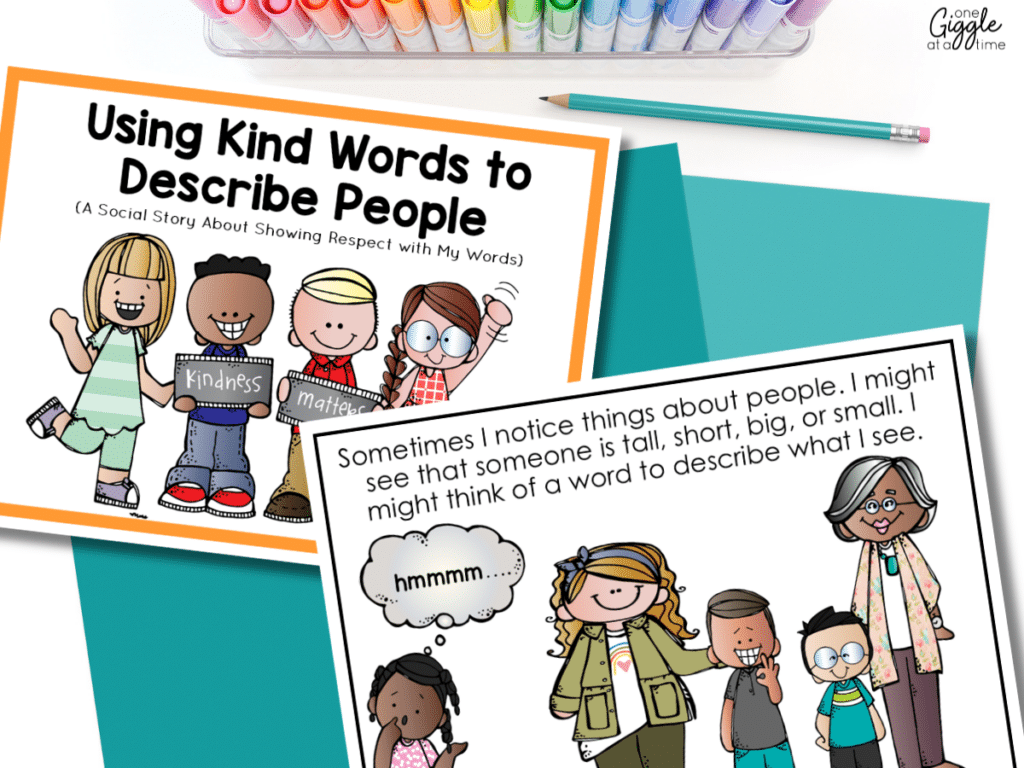
The Using Kind Words Social Story perfectly demonstrates how to use kind words and how words affect others. By providing specific examples of what to say in common scenarios, kids feel more prepared before challenges arise.
The language in the Using Kind Words Social Story is simple, relatable, and developmentally age-appropriate for young children—making it easy for them to connect with the message!
How to Use a Social Story
Social stories are easy tools to use:
- Start by reading the social story aloud.
- Pause as you read to discuss feelings, highlight choices, and review outcomes.
- Practice the kind word phrases together.
- Revisit the social story when problems arise.
*If you are a classroom teacher, send a copy of the Using Kind Words Social Story home so parents have a copy and can reinforce the same language easily!
2. Model, Model, Model!
Next, remember to model kind words ALL DAY LONG. Kids pay attention to what adults say more than you realize, and they are far more likely to use kind words when they know exactly what to say.

Use sentence starters and language frames to help young students learn to anticipate kind words and begin to use them on their own with others.
Try using phrases like:
- Can I try that when you’re done?
- I feel frustrated. Can we talk about it?
- Can you please say that more kindly?
- I didn’t like that. Please stop.
- Thank you for helping me.
The Kind Words Resource includes examples like these in the Kind Words Bank and Kindness Power Tools Visuals, so you don’t have to do the extra brain work to create them on your own!
When your students learn these powerful, kind phrases, they gain the confidence to advocate for themselves, work through misunderstandings, and manage conflicts peacefully—and what a beautiful sight that is!
3. Practice Kind Words Together
Finally, allow students to practice using kind words over and over again through fun, low-prep activities.

Try these simple options:
- Role-playing common scenarios
- Daily compliment circles
- Partner tasks that require cooperation
- Sentence frames
The Using Kind Words Resource includes interactive activities that make practicing kind words fun and meaningful. As children practice this skill, they will find the kind words that stick most to them!
Kind communication becomes a skill kids use in every part of life—not just at school or during work sessions at home. As your children become more familiar with kind words, you will see them begin to respect and include one another more often, too! This leads to a more positive classroom environment for everyone.
Encourage kindness with this fun Kindness Cootie Catcher, too!
When you commit to teaching kindness, you’re doing so much more than correcting wrong behaviors. You’re giving students the language they need to build friendships, solve problems, and communicate with confidence! Kind words shape kind hearts, and your students are learning how powerful their words can be— all thanks to you. Keep up the great work!
Let me know if you have any questions about anything you see here. Don’t forget to pin this post to refer to it later!

Other posts you may enjoy:
The Importance of Using Emotional Regulation Strategies in the Classroom
11 ENGAGING Ways to Teach Social-Emotional Learning in the Classroom
How Social Skills Stories Build the Positive Classroom Climate You Are Craving
GUIDE STUDENTS IN DEVELOPING A GROWTH MINDSET WITH THESE
Free Growth Mindset Punch Cards
The perfect way to start meaningful habits and conversations with your students!

Diane Romo
I’m so glad you’re here! I share practical ideas and ready-to-use resources for teachers, parents, homeschoolers, and counselors who want to foster strong relationships and inspire meaningful learning. If you support kids, this space is for you.