





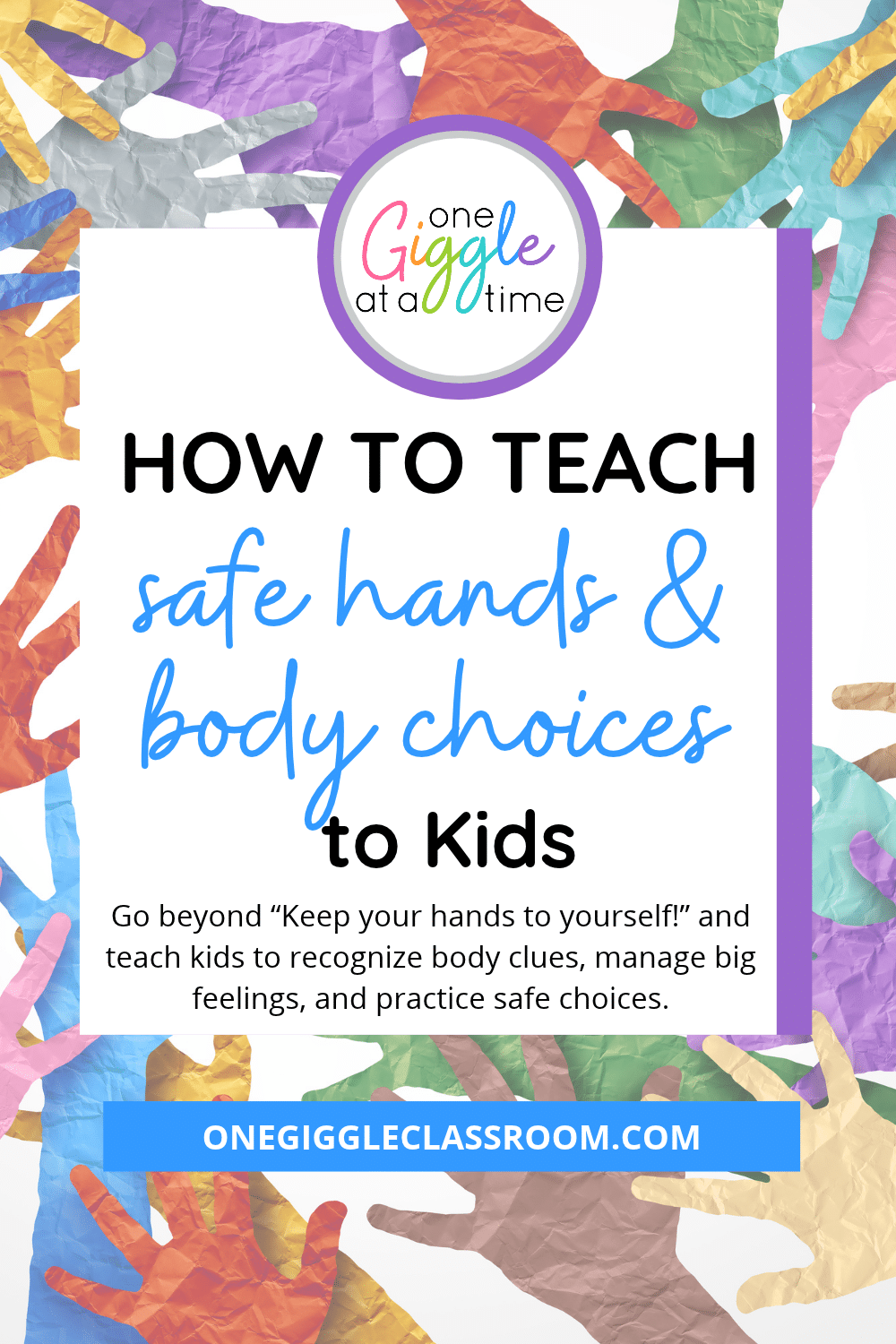
How to Teach Safe Hands and Body Choices to Kids (Beyond “Keep Your Hands to Yourself”)
Share This:
“Keep your hands to yourself!”
Sound familiar?
Whether you’re a teacher managing a busy classroom, a parent helping siblings work through disagreements, or a homeschooler navigating a frustrating lesson, you’ve probably said those words more times than you can count!
Maybe a child pushes to get to the front of the line. Perhaps siblings are arguing over a favorite toy. Or maybe a child becomes so frustrated with a difficult activity that they want to throw their materials.
Sometimes children even get so excited during play that their hands and bodies move before they’ve had a chance to think.
These situations can be challenging for everyone involved.
Teaching safe hands and body choices is about so much more than reminding kids to keep their hands to themselves. It’s about helping them understand their feelings, recognize their body’s signals, and learn what they CAN do when big emotions take over.
And while reminding children to keep their hands to themselves may stop an unsafe behavior momentarily, it doesn’t actually teach them what to do instead.
That’s where we have an opportunity to approach things differently.
How do you teach kids to stop hitting, kicking, or pushing?
Rather than focusing only on stopping hitting, kicking, pushing, or grabbing, we can help kids understand their feelings, recognize the signals their bodies are sending, and practice safer ways to respond.
Because learning to use safe hands and body choices is a skill. And like any other skill, it takes teaching, support, patience, and practice.
Why Do Young Children Hit, Kick, Push, or Grab?
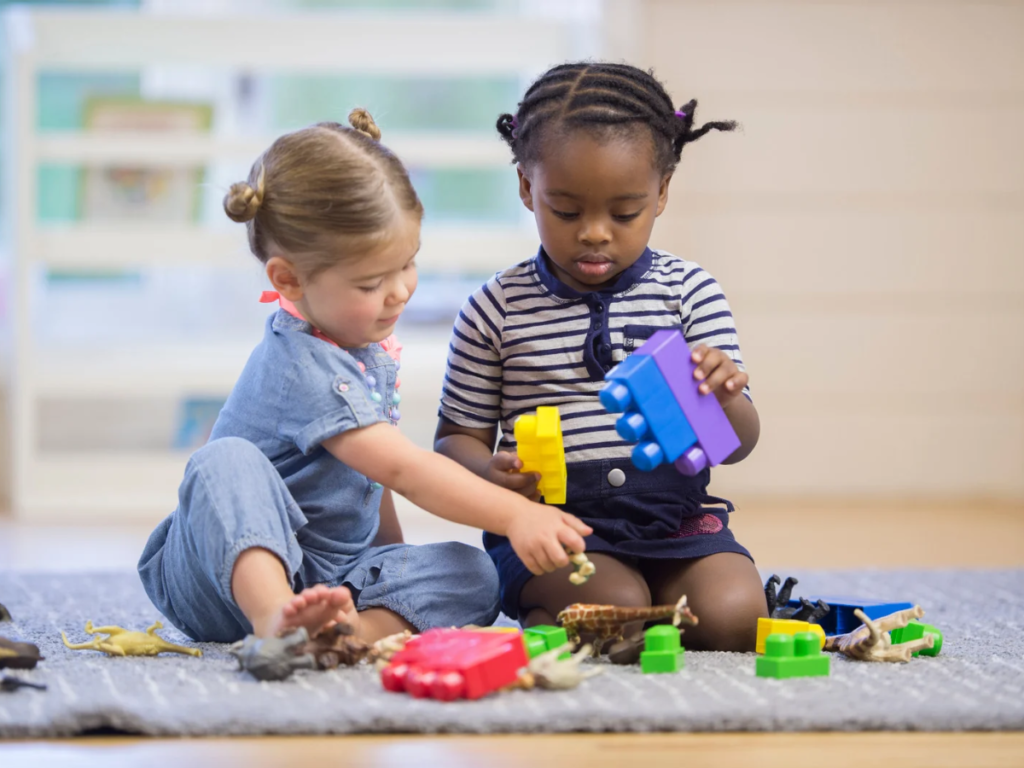
Young children are still developing the skills they need to manage strong emotions, control impulses, communicate their needs, and navigate relationships.
Sometimes a child hits because they’re frustrated when a sibling takes their toy. Another child might push because they’re overwhelmed by a crowded classroom or playground. A child working on a challenging homeschool assignment might become so discouraged that they push their materials away or throw a pencil.
And sometimes children become so excited during a game or family activity that their bodies move faster than their thinking.
The behavior may look similar, but the reasons behind it can be very different.
That’s why it’s important to look beyond the action and consider what the child might be experiencing.
Ask yourself:
- What happened just before the behavior?
- What might the child have been feeling?
- Were there signs that the child was becoming overwhelmed?
- Was the environment too noisy, crowded, or demanding?
- Does the child know another way to communicate what they need?
- What support or skill might help the child respond differently next time?
Understanding the reason behind a behavior doesn’t mean allowing unsafe actions. It means recognizing that children often need help learning safer ways to express themselves.
Our first responsibility is always to keep everyone safe. Then, when the child is ready, we can help them learn.
1. Help Children Recognize Their Body Clues
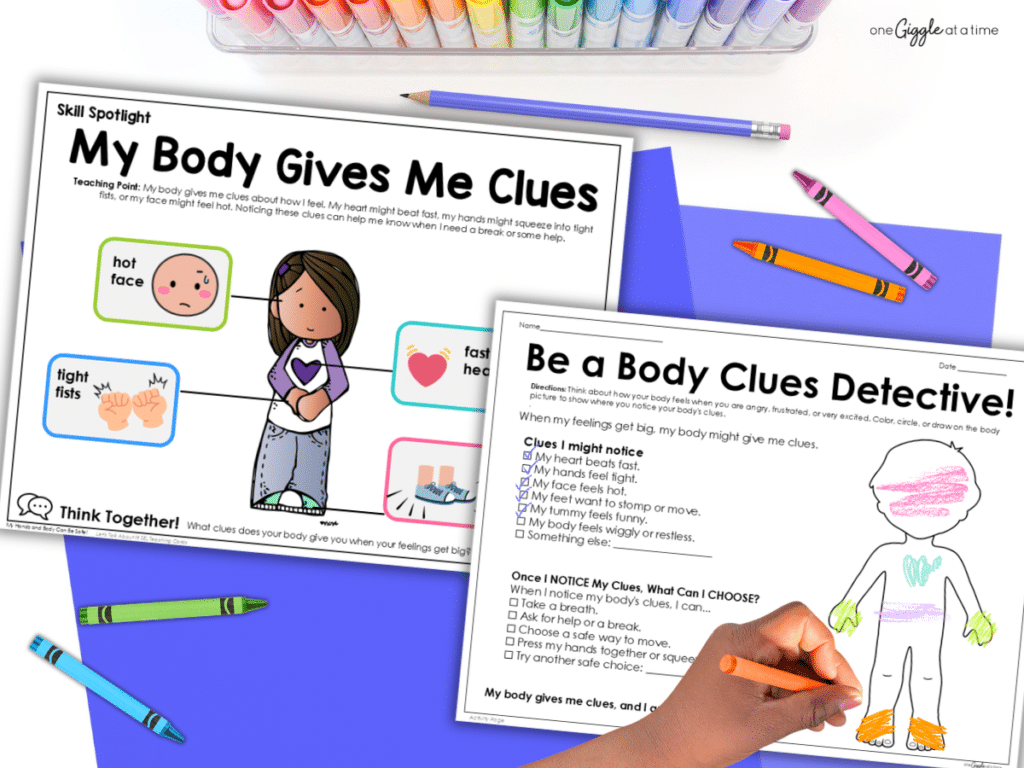
Before children can manage big feelings, they need opportunities to recognize what those feelings might look and feel like in their bodies.
For example, a child might notice:
- Hands becoming tight or squeezing into fists
- A heart beating faster
- A face feeling hot
- Feet wanting to stomp
- A tummy feeling funny
- A body that wants to move, wiggle, or run
These physical sensations are what I like to call body clues.
Body clues can help children begin to recognize when they might need a break, some movement, or support from a trusted adult.
Not every child experiences feelings in the same way. Some children may notice physical sensations easily, while others need more time, modeling, or visual supports.
Try This: Become Body Clues Detectives!
During a calm moment, invite children to explore how different feelings affect their bodies.
Ask questions such as:
- “What does your body feel like when you’re excited?”
- “What happens to your hands when you’re frustrated?”
- “How can you tell when your body might need a break?”
In the classroom: Use a morning meeting or SEL lesson to discuss body clues. Children can draw, point to pictures, or demonstrate different sensations and movements.
At home: Talk about body clues during everyday moments, such as after an exciting game or when a child is disappointed about a change in plans.
In your homeschool: Incorporate body awareness into a health lesson, movement break, or conversation about feelings.
The goal isn’t to identify a correct answer. It’s to help children become more aware of their own bodies.
2. Teach Children to Pause Before Reacting
When children experience strong feelings, they may react before they’ve had time to think about their choices.
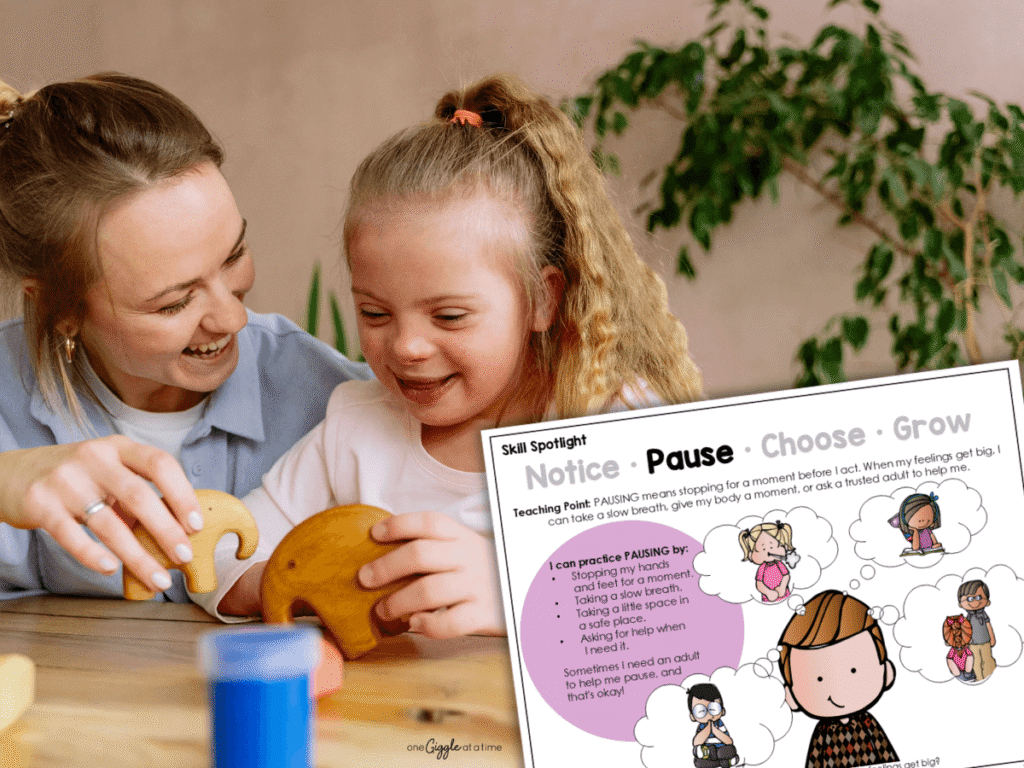
That’s why learning to pause is such an important part of developing self-control.
But here’s something important to remember:
A child who is overwhelmed may not be able to pause independently yet.
They may need an adult to help them slow down, feel safe, and regain control.
We can model simple strategies such as:
- Taking a slow, comfortable breath
- Stepping away from a frustrating situation with support
- Asking for a break
- Moving to a quieter space
- Getting help from a trusted adult
Practice these strategies when children are calm rather than waiting until a difficult moment.
Try This: Practice the Pause
During a calm moment, introduce a pretend situation.
“Imagine you’re building something, and it falls apart. You feel so frustrated that you want to throw the pieces. What could you do?”
Help children practice stopping, recognizing their feelings, and choosing a safe response.
In the classroom: Practice pausing before responding to problems during centers, transitions, or cooperative activities.
At home: Model pausing when siblings disagree, a game doesn’t go as planned, or a child becomes upset about a family routine.
In your homeschool: Encourage children to pause and ask for help when an assignment feels frustrating or overwhelming.
Remember, young children often need adults to guide them through these moments before they can use the strategies independently.
3. Teach Kids What Safe Hands and Bodies CAN Do
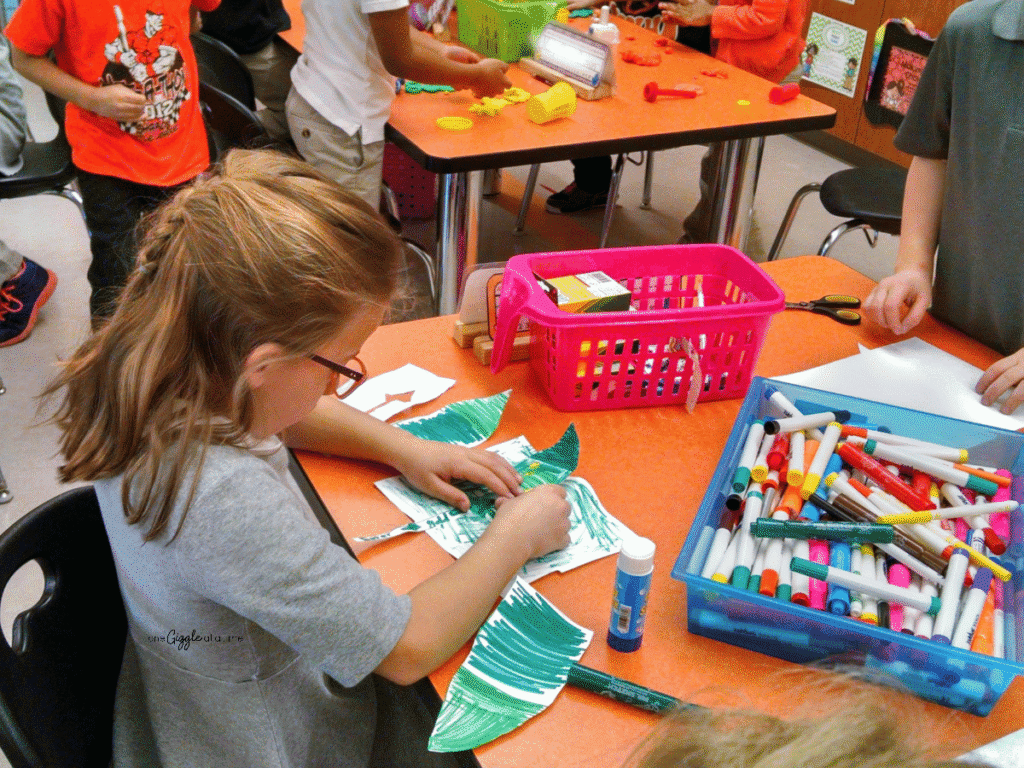
One of my favorite ways to teach behavior expectations is to focus on what children CAN do, rather than only telling them what they shouldn’t do.
Think about the difference between these two reminders:
“Don’t hit!”
and
“Your hands can squeeze a soft ball, press together, or ask for help.”
The second statement gives the child something concrete to practice.
Of course, we still need to set clear limits around unsafe behavior. But we can pair those limits with practical alternatives. We want to give kids some safe hands and body choices to fall back on.
Safe Choices for Hands
- Pressing palms together
- Squeezing a soft ball or calming object
- Drawing or building
- Holding a favorite comfort item
- Using words, pictures, or gestures to ask for help
Safe Choices for Bodies
- Stretching
- Taking a movement break
- Pushing gently against a wall
- Walking with an adult
- Moving to a quieter area when needed
Not every strategy will work for every child or every situation.
That’s okay!
The goal is to help children discover several safe options so they have choices when big feelings arise.
Try This: What CAN My Hands Do?
Invite children to brainstorm all the wonderful things their hands can do.
They might suggest drawing pictures, helping someone, building with blocks, turning pages, planting flowers, or giving a high-five when welcomed.
Then discuss what their hands can do when they’re experiencing big feelings.
In the classroom: Create a group display featuring children’s ideas for safe and helpful hands.
At home: Make a family list of helpful hands and safe choices. Post it somewhere children can easily see it.
In your homeschool: Have children draw or write about safe ways to use their hands and bodies. Revisit their ideas during challenging moments.
This simple activity helps children recognize that their hands and bodies are capable of so many positive things!
Knowing what to teach children is one thing, but finding the right words in the middle of a challenging moment isn’t always easy!
That’s why I created a FREE printable guide, Beyond “Keep Your Hands to Yourself!” — 10 Helpful Things to Say Instead.
4. Practice Safe Choices Through Everyday Situations
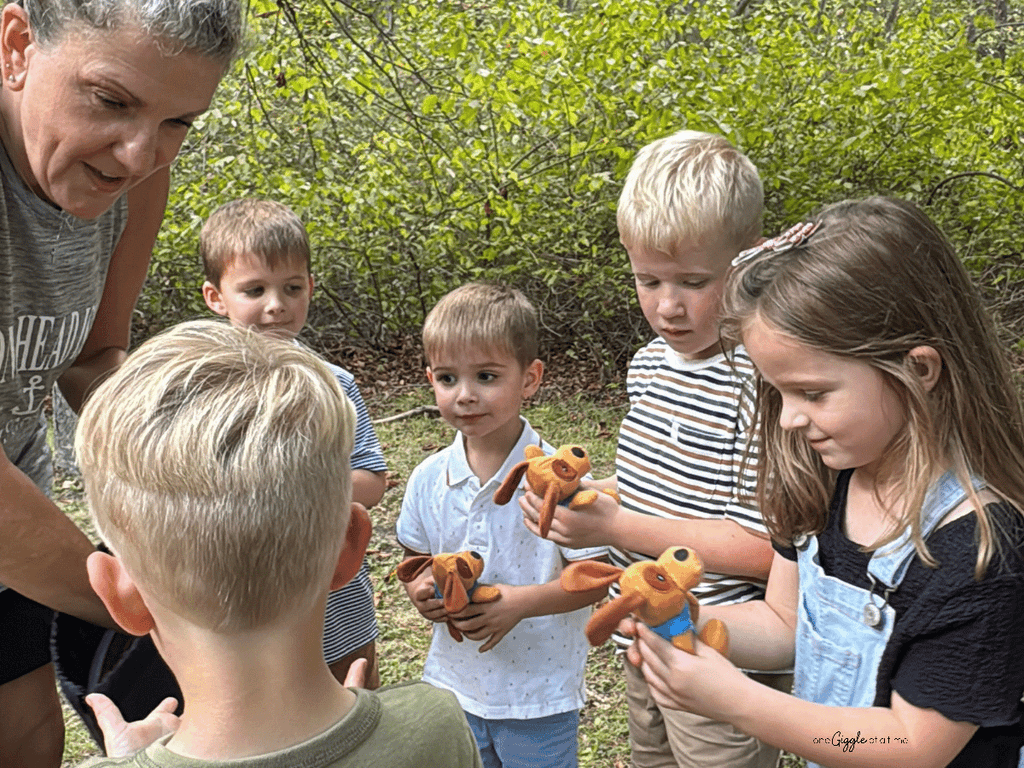
Children need more than explanations. They need opportunities to practice.
Social stories, discussion cards, role-playing, and guided activities are wonderful ways to help children explore situations before they happen in real life.
Here are a few examples you can use in a classroom, at home, or during homeschool lessons.
Situation 1: Someone takes a toy you were using.
“What might your body feel like? What could your hands do instead of grabbing or pushing?”
Situation 2: Your block tower falls down.
“What could you do if you feel so frustrated that you want to throw the blocks?”
Situation 3: You’re playing a game, and you don’t win.
“What could you do if you feel disappointed or angry?”
Situation 4: Something really exciting happens!
“How can you celebrate while keeping your hands and body safe?”
These conversations help children understand that safe choices aren’t only important when they’re angry.
Excitement, disappointment, frustration, and even happiness can sometimes lead to impulsive movements.
Make Practice Part of Everyday Life
Teachers can incorporate these conversations into morning meetings, SEL lessons, small-group instruction, and classroom routines.
Parents can practice during family games, sibling disagreements, playdates, and everyday activities.
Homeschoolers can use short role-playing activities, discussion cards, and movement breaks to reinforce skills throughout the learning day.
And here’s something worth emphasizing:
There may be more than one safe choice.
We want children to learn how to think about their options, not simply memorize one response.
5. Remember That Mistakes Are Part of Learning
Even with consistent instruction and practice, children will sometimes make unsafe choices.
When that happens, our response matters.
First, make sure everyone is safe. Provide support for anyone who has been hurt, and help the child who acted unsafely settle before attempting a teaching conversation.
Once everyone is ready, we can help the child reflect.
- “What happened?”
- “What were you feeling?”
- “What could you try next time?”
- “Is there something we can do to help make things better?”
Depending on the situation, making things better might involve checking on someone, helping repair something, or practicing a different response.
Avoid forcing an immediate apology when a child is still overwhelmed. Instead, help them understand what happened and explore meaningful ways to make things better.
Whether a child is learning to manage frustration with classmates, siblings, friends, or family members, the message remains the same:
A mistake doesn’t define who you are. You can learn, practice, and grow.
A Simple Four-Step Routine for Teaching Safe Hands and Body Choices
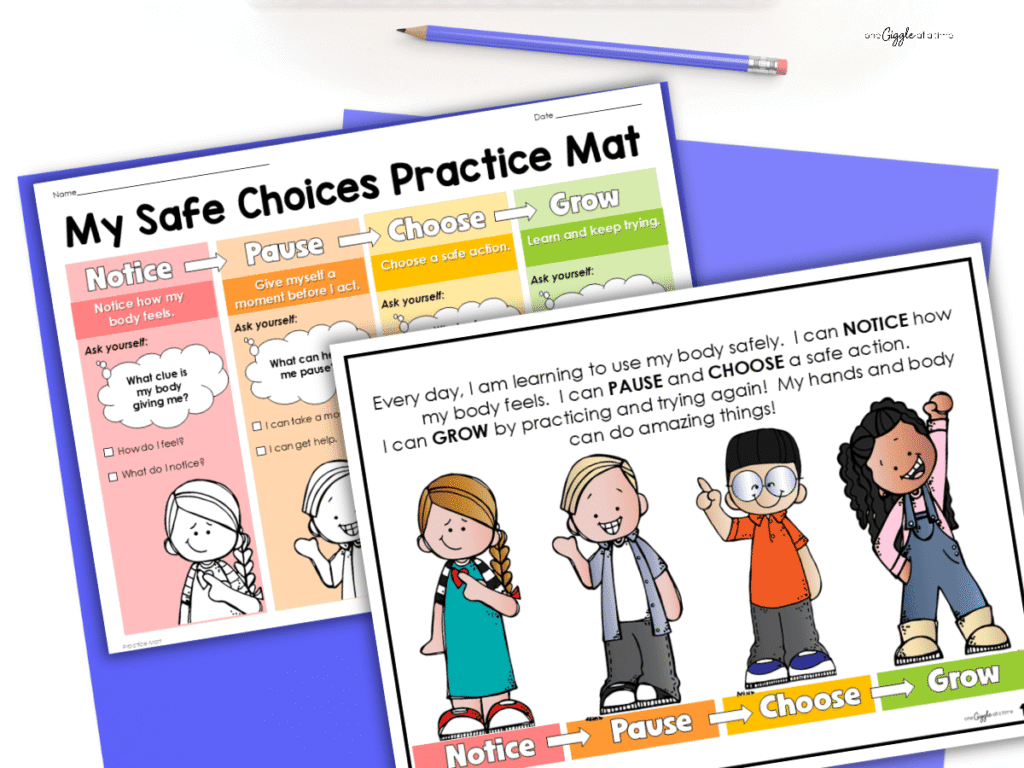
When developing my newest social story and SEL toolkit, I wanted children to have a simple routine they could learn, remember, and practice with adult support.
That’s how the NOTICE → PAUSE → CHOOSE → GROW framework became the foundation of the resource.
NOTICE: I can recognize my feelings and body clues.
PAUSE: I can slow down and get support when I need it.
CHOOSE: I can find a safe way to use my hands and body.
GROW: I can learn from my choices, practice, and try again.
This routine gives children a consistent way to think about their feelings and actions.
It also gives teachers, parents, homeschoolers, counselors, and other trusted adults common language they can use to reinforce the same skills across different settings.
And the best part? These skills extend far beyond learning not to hit, kick, or push.
They’re foundational skills children can continue developing as they learn to manage emotions, solve problems, and build relationships.
A Ready-to-Use Resource for Teaching Safe Hands and Body Choices
If you’re looking for engaging safe hands activities for kids that go beyond repeated behavior reminders, I’ve put together a comprehensive resource to help!
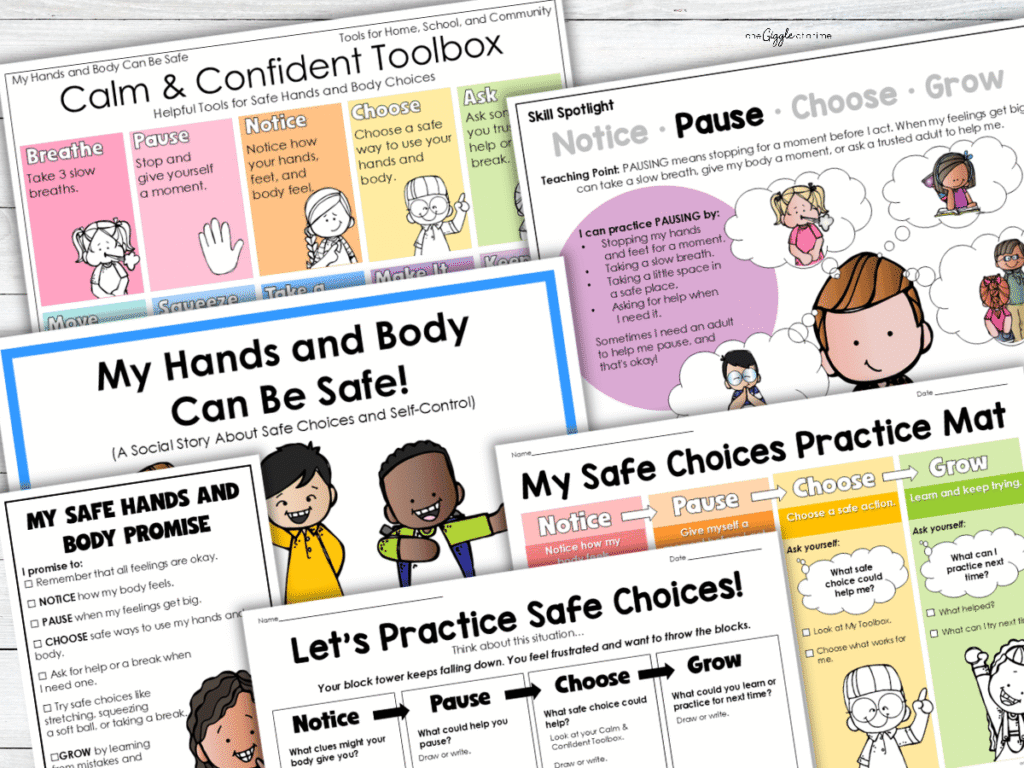
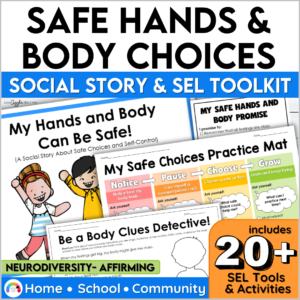
My Hands and Body Can Be Safe! Social Story & SEL Toolkit was designed for teachers, parents, homeschoolers, counselors, and other adults supporting young children as they develop emotional awareness, self-control, and safe body choices.
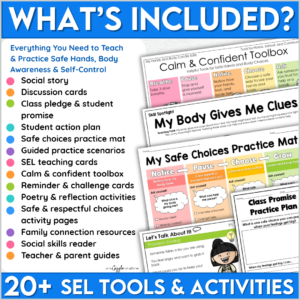
The toolkit includes:
- An illustrated social story
- SEL Teaching Cards featuring the NOTICE → PAUSE → CHOOSE → GROW framework
- Discussion cards for exploring feelings, problem-solving, and real-life situations
- Calm & Confident Toolbox strategies
- Guided practice scenarios and a practice mat
- Body awareness and safe hands extension activities
- A Class Pledge and Student Promise
- A social skills reader, poetry, and reflection activities
- Family connection materials
- Teacher and parent guidance
- BONUS narrated video of the social story!
For teachers: Use the resource for whole-class SEL instruction, morning meetings, small groups, and individualized support.
For parents: Reinforce safe choices during sibling disagreements, playtime, family routines, and other everyday situations.
For homeschoolers: Incorporate the social story, discussion cards, movement strategies, and hands-on activities into your daily lessons.
For counselors and specialists: Use the visuals, scenarios, and reflection activities to support children who need additional practice with emotional regulation and safe physical responses.
The activities are flexible, allowing you to choose the strategies and level of support that work best for each child.
Explore My Hands and Body Can Be Safe! Social Story & SEL Toolkit Here
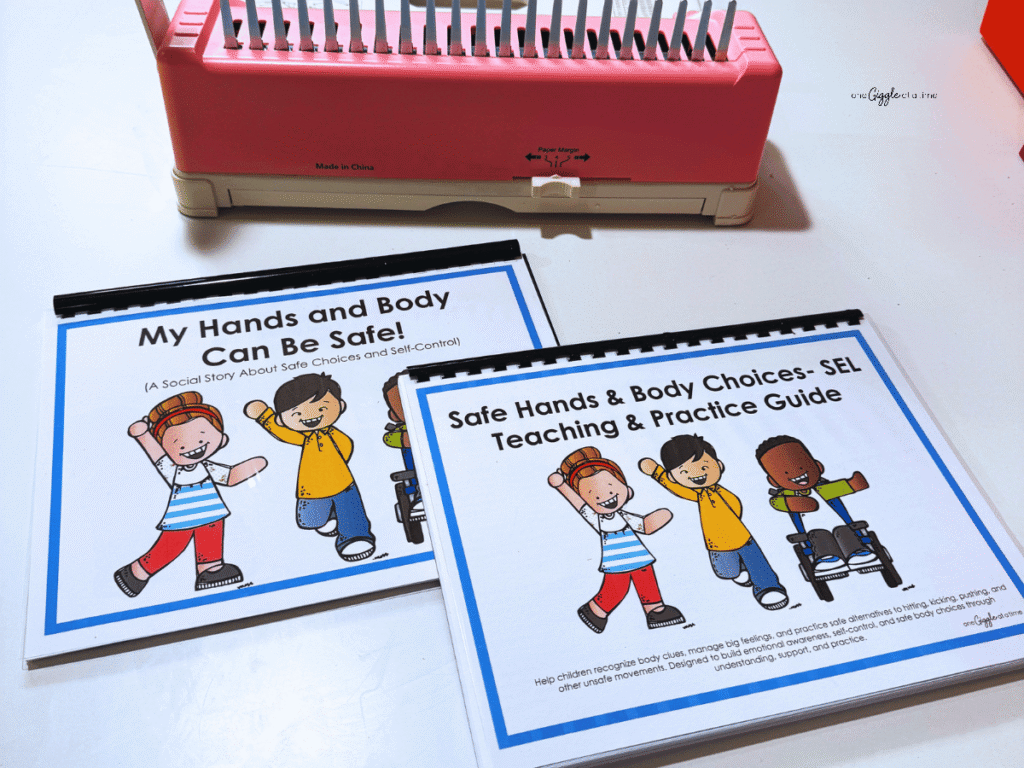
Bonus Teaching Tip: Turn Your Printable SEL Toolkit Into a Reusable Teaching Guide!
Here’s a little organization idea I’ve been experimenting with, and I’m loving how practical it is!
Instead of keeping all your SEL materials in separate folders, consider using a binding machine to create two coordinating books.
Book 1: The Social Story
Bind the illustrated social story pages together so they’re easy to read, revisit, and share with children.
Book 2: The SEL Teaching & Practice Guide
Bind the teacher/parent guidance, SEL Teaching Cards, discussion cards, calming strategies, and activity pages into one organized teaching guide.
You can even place the bound story or guide on a tabletop easel so children can easily see the pages during small-group lessons, counseling sessions, homeschool activities, or family learning.
Teachers: Keep your guide close by for morning meetings, small-group lessons, and ongoing skill reinforcement.
Parents: Store your guide where it’s easy to reach for family conversations or extra practice.
Homeschoolers: Use the bound guide as a convenient part of your daily learning routine.
It’s a simple way to keep everything organized and ready whenever you need it!
The bound books shown are examples of how you can assemble the printable resource. Binding supplies and physical books are not included with the digital download.
Safe Hands and Bodies Are Skills Worth Teaching
Teaching children to use safe hands and bodies isn’t about expecting perfect behavior.
It’s about helping them recognize what’s happening inside their bodies, understand their feelings, and develop safe ways to respond.
Sometimes they’ll remember to pause. Sometimes they’ll need an adult to help. And sometimes they’ll make mistakes and need another opportunity to practice.
That’s part of learning.
Whether we’re supporting children in a classroom, around the kitchen table, during homeschool lessons, or out in the community, we have the opportunity to teach skills that will help them far beyond the moment.
When we replace repeated reminders with meaningful instruction, supportive relationships, and opportunities to practice, we give children something much more valuable than a rule to follow.
We give them skills they can carry into their friendships, their families, their learning experiences, and their everyday lives.
And that’s how we help children grow, one giggle at a time. 💙
Let me know if you have any questions about anything you see here. Don’t forget to pin this post to refer to it later!
Post & Products You May Also Enjoy:
GUIDE STUDENTS IN DEVELOPING A GROWTH MINDSET WITH THESE
Free Growth Mindset Punch Cards
The perfect way to start meaningful habits and conversations with your students!

Diane Romo
I’m so glad you’re here! I share practical ideas and ready-to-use resources for teachers, parents, homeschoolers, and counselors who want to foster strong relationships and inspire meaningful learning. If you support kids, this space is for you.