





4 Simple Ways to Help Kids Handle Big Emotions in Friendships
Share This:
Welcome to part 3 of the Friendship Series– where you’ll learn 4 easy ways to help kids respond, not react, when big emotions arise. Big feelings are a natural part of childhood— but when those emotions spill over into impulsive reactions, friendship challenges quickly follow. Whether you’re a teacher, counselor, parent, or homeschool caregiver, you play an essential role in guiding children toward emotional regulation, empathy, and problem-solving that will carry them throughout their lives. When you teach these skills clearly, you empower children to pause, reflect, and make good choices that strengthen their friendships rather than damage them.
Why Big Emotions Usually Lead to Big Reactions
Before diving into strategies, it’s important to consider what’s happening beneath the surface. Children often experience emotions more intensely because they are still developing their regulation skills.
Moments of frustration, embarrassment, and disappointment can quickly lead to:
- Impulsive words
- Escalating conflicts
- Difficulty calming down
- Trouble solving problems.
These aren’t behavior problems, though—they’re skill-building opportunities!
1. Teach the Pause: Supporting Impulsivity Before It Starts
One of the most effective ways to support children is by helping them learn to slow down in the moment.
You’ve seen this:
A child loses a game and immediately yells, “That’s not fair!” while knocking over the game pieces. The reaction is instantaneous—and the impact it leaves on a friendship can be, too.
How You Can Support Impulse Control
You can teach children to pause before reacting by building simple, repeatable habits:
- Model & practice counting to five
- Teach deep breathing strategies
- Use visual reminders (like a “pause” card or calm-down cue)
- Rehearse what to say instead— Can we try again? I feel frustrated right now.
When you explicitly teach these strategies, you’re answering the question of how to help a child with big emotions in a proactive, empowering way!
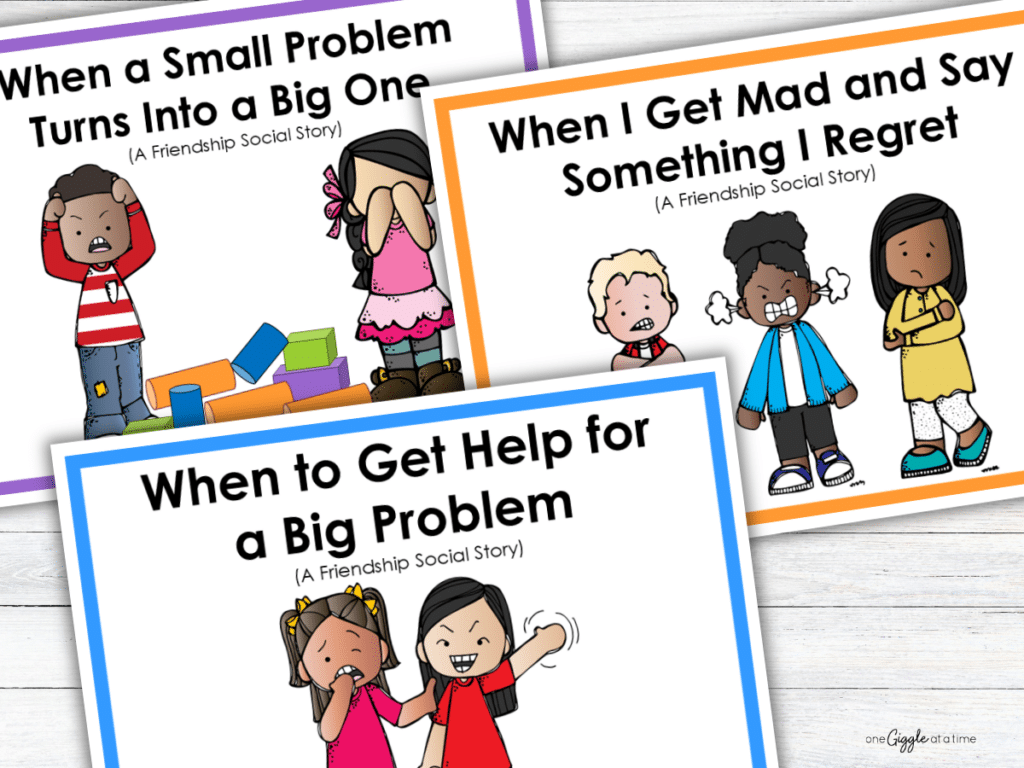
Using kid-friendly tools like the Big Feelings & Reactions Mini Bundle also gives children consistent language and examples they can remember when emotions run high later on.
2. Catch Escalation Early: When Small Problems Turn Into Big Ones
Many friendship struggles with kids don’t start as big problems— they become big through escalation.
You’ve seen this in action:
Two children start arguing about whose turn it is. Voices get louder. One child crosses his arms, and the other ones pushes. Now both children are overwhelmed, and the situation has seemed to spiral out of control.
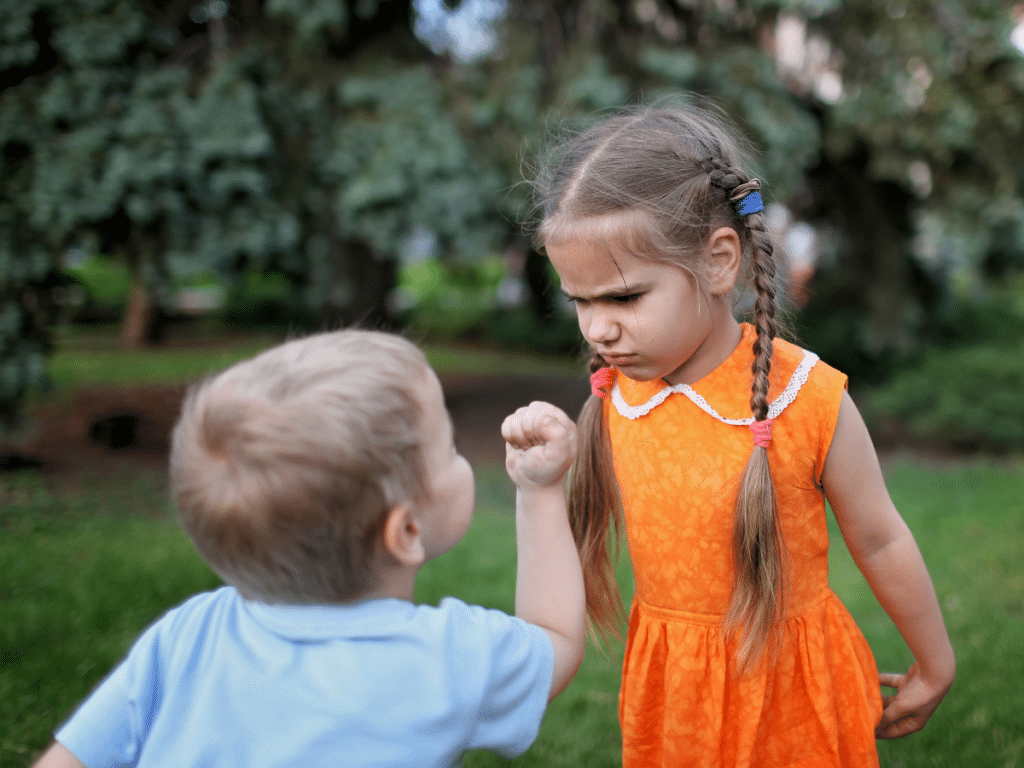
Teaching Kids to Recognize Escalation (Before It Gets Out of Hand)
Help kids learn the early warning signs of escalation. Talk about body clues, thought patterns, and voice changes.
Teach them to recognize things like:
- Tight fists, fast heartbeat, and feeling “hot” inside
- Thinking “That’s not fair!” or “they always do this!”
- A voice getting louder or sharper
Once you’ve done that, give kids tools to stop escalation in its tracks.
- Pause and take a breath
- Step away for a moment
- Use a calm problem-solving phrase, like “Can we figure this out together?” or “I didn’t like that. Can we try again?”
The When a Small Problem Turns into a Big One social story helps children learn exactly how quickly situations can escalate and how to stop them before things get out of control.
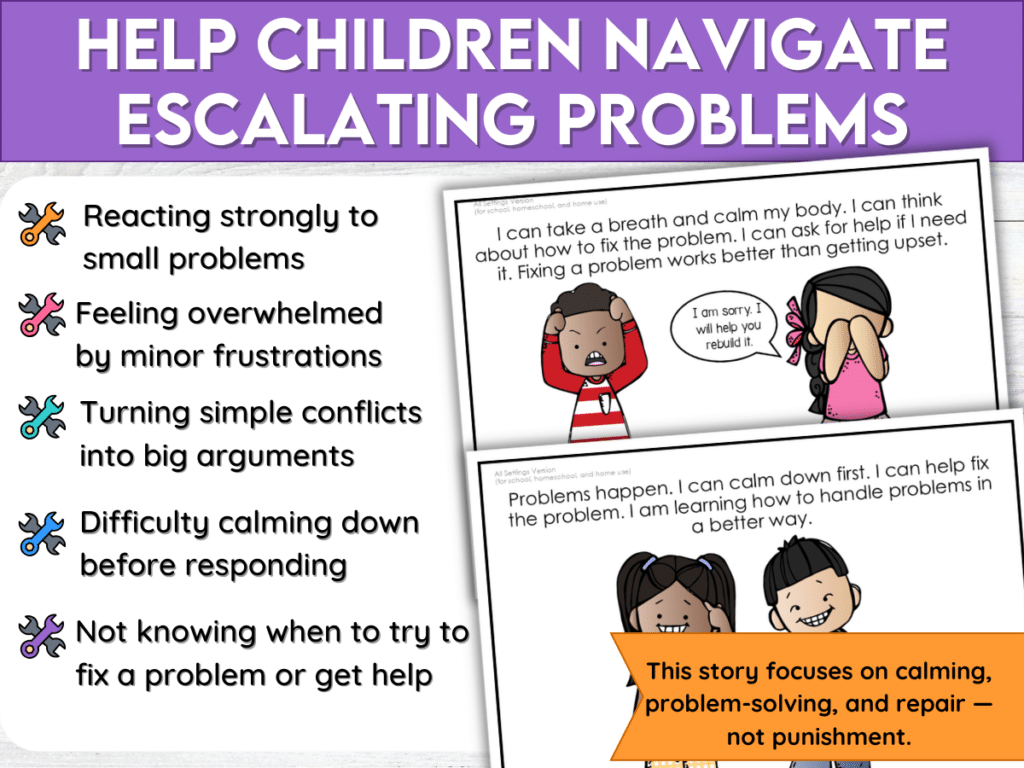
Use this freebie to help you know exactly what to say to kids when problems escalate quickly!
3. Build Emotional Regulation Skills
If there’s one thing to remember, it’s that a child can’t solve a problem while dysregulated. They need to be calm first, then solve the problem.
You know this too well– a child says something very hurtful during an argument with a friend. Later on, after they’ve had time to cool down, they admit, “I didn’t really mean that.” The issue wasn’t intent; it was regulation.
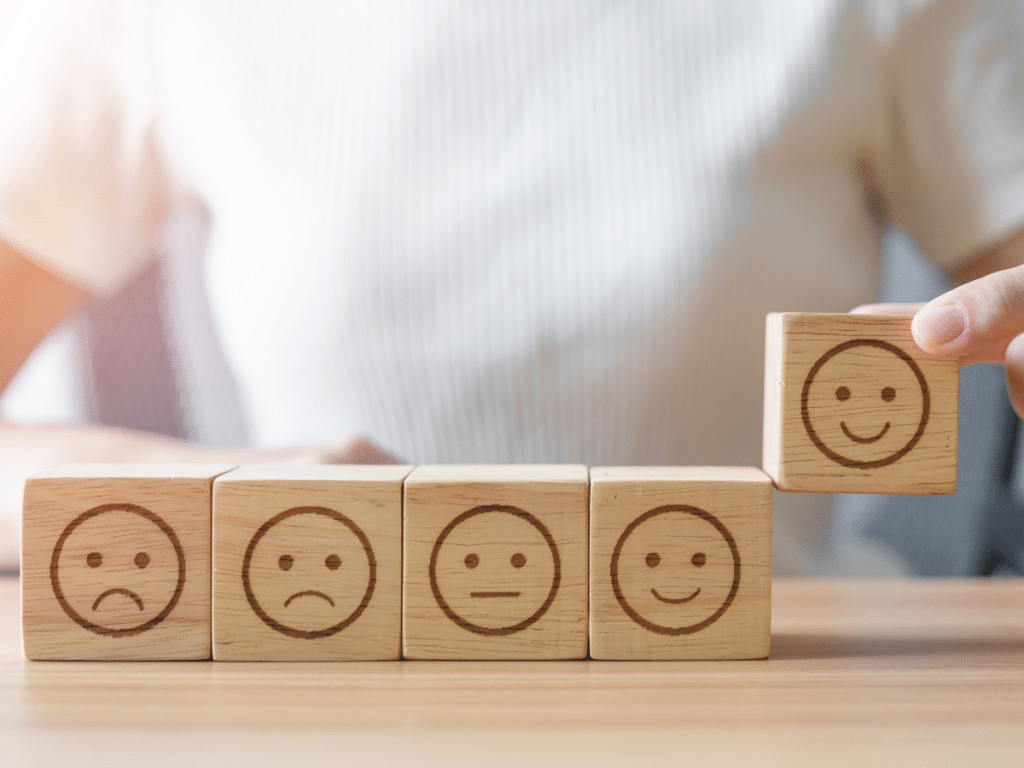
Tools to Build Regulation Skills
Focus on helping children learn emotional regulation by calming their bodies and their minds before addressing a friendship challenge:
- Use visual supports like emotion charts
- Remind kids often that it’s okay to take a break and try again
- Practice calm down strategies every day (not just during a conflict)
- Create a calming corner in your space
The When I Get Mad and Say Something I Regret social story is especially helpful in showing kids the connection between big emotions, reactions, and friendship repair.
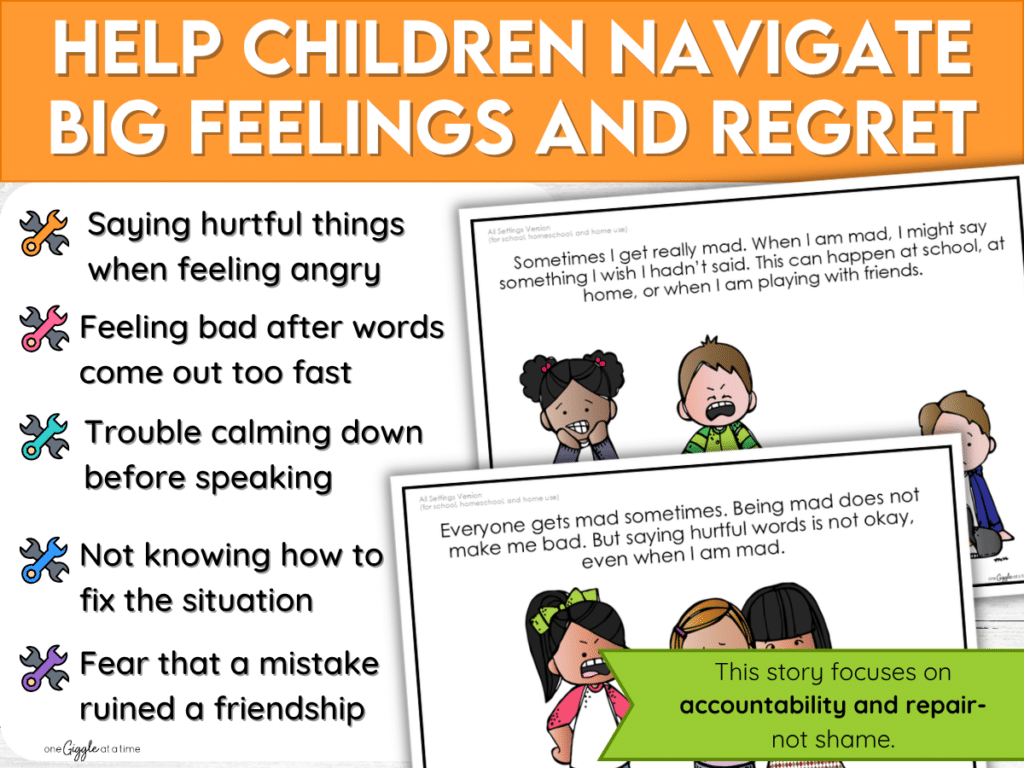
When children learn to regulate, they gain control over their reactions—not just their emotions!
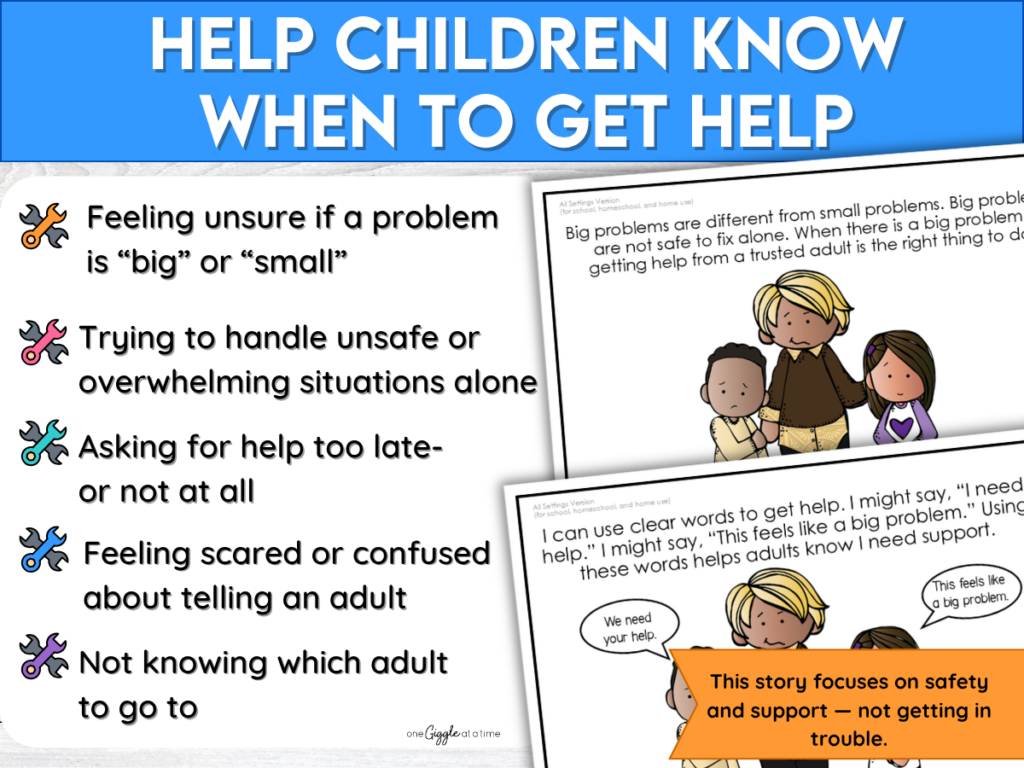
4. Teach When to Get Help
Sometimes, the best response is knowing when to get a trusted grown-up involved. Understanding when to do this is about recognizing the difference between big problems and small problems.
Encourage kids to get outside help when:
- Someone is physically or emotionally hurt
- The problem won’t stop despite their best attempts
- They feel unsafe
The When to Get Help for a Big Problem social story gives children clear, concrete examples of when and how to seek help from an adult. It includes examples that are easy to relate to, like friendship challenges at school, homeschool co-ops, and even neighborhood friendships.
What success looks like:
When a child keeps getting left out during recess, instead of yelling or storming off, they seek help from a teacher. This is a learned skill— not tattling!
Proactive Teaching: Why Social Stories Work
When you think about how to help a child with big emotions, consistency and clarity matter. Social stories provide both of these.
Social stories help you:
- Teach skills proactively— before problems happen!
- Offer consistent language that can be used in several settings
- Meet children where they’re developmentally at with visuals and repetition
- Reinforce learning one-on-one, in small groups, or in whole-class settings
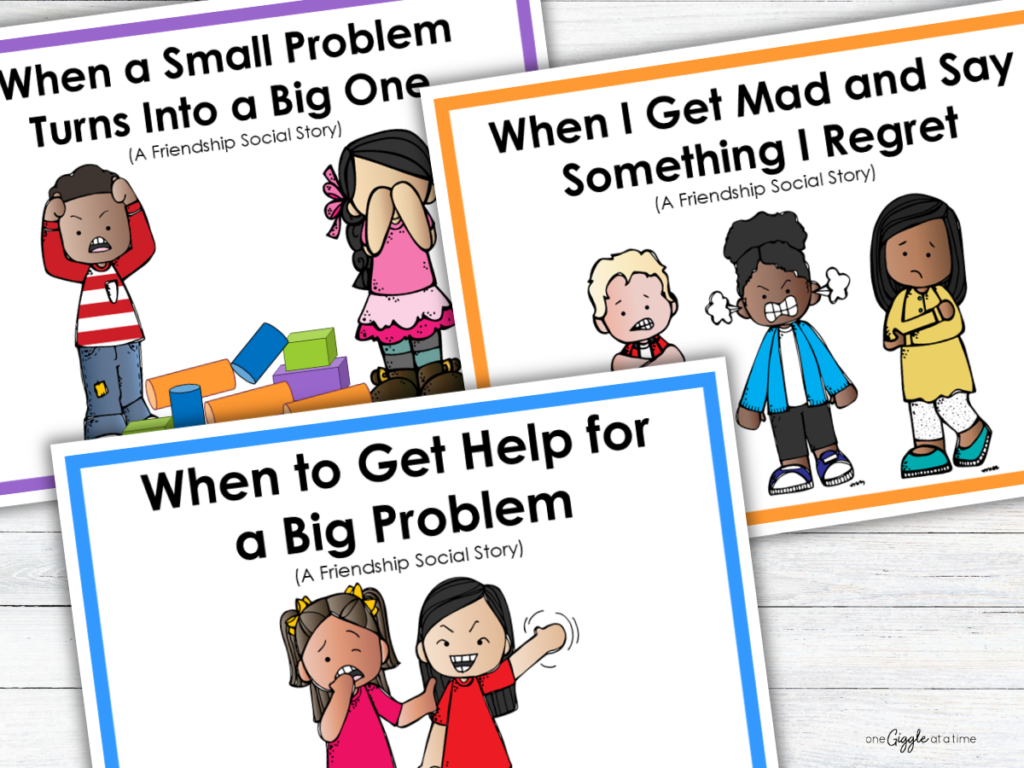
The Big Feelings & Reactions Mini Bundle includes everything you need to help kids understand how their strong emotions influence their choices. This set also teaches children that calming down first leads to better outcomes when dealing with problems with friends.
Continue the Friendship Journey!
Big emotions and reactions are just one part of managing friendship challenges. Explore the earlier parts of this series to learn even more about childhood friendships:
And check back for part 4 soon— where you’ll learn all about friendship repair strategies that actually work!
Looking for Even More?
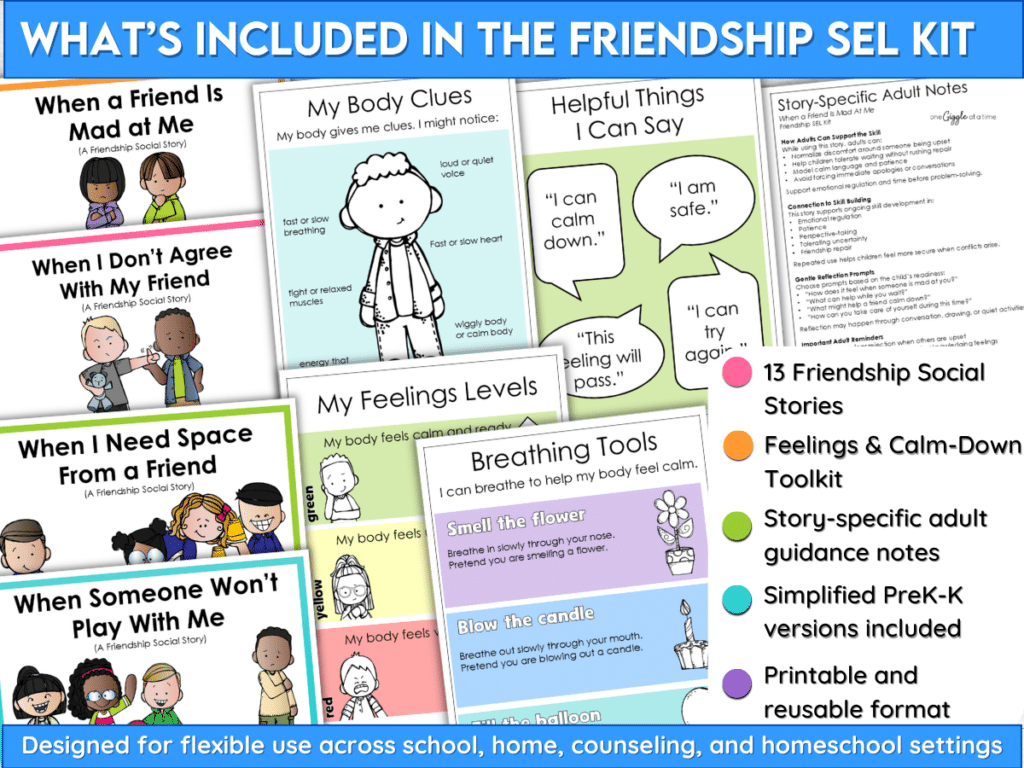
The Friendship SEL Kit brings all of these parts together with 13 friendship-focused social stories and a comprehensive calm-down toolkit perfect for kids who are homeschooled, in a public or private school setting, or needing extra support from a school counselor.
When you teach children how to manage big emotions and reactions, you’re doing more than preventing conflicts— you’re building lifelong skills! You’re helping them understand their emotions, respond with intention, and navigate friendships with empathy and confidence. With your consistent support, clear tools, and proactive teaching methods, you give children the structure they need to grow and the freedom to learn independently along the way—one lesson at a time!
Let me know if you have any questions about anything you see here. Don’t forget to pin this post to refer to it later!
Other posts you may enjoy:
The Importance of Teaching Emotional Awareness to Kids
8 BEST Emotional Regulation Books for Kids: Emotional Regulation Series Part 8
Unlock Success: Why Teaching Kids Self-Control Early is Key
GUIDE STUDENTS IN DEVELOPING A GROWTH MINDSET WITH THESE
Free Growth Mindset Punch Cards
The perfect way to start meaningful habits and conversations with your students!


Diane Romo
I’m so glad you’re here! I share practical ideas and ready-to-use resources for teachers, parents, homeschoolers, and counselors who want to foster strong relationships and inspire meaningful learning. If you support kids, this space is for you.