




Why is Teaching Kids Self-Control Important? 5 Simple Ways to Teach It
Share This:
Self-control is so much more than just holding back from an extra cookie or showing kindness while waiting your turn— it’s a life skill everyone needs! Self-control gives children practical skills they can use when feeling frustrated, excited, disappointed, worried, or overwhelmed. Whether you’re a classroom teacher, school counselor, or homeschooling parent, prioritizing self-control now will have long-lasting positive effects!
Why is Self-Control Important for Kids?
Self-control is important for kids because it helps them manage their thoughts, feelings, and actions. When they can manage these things, they can respond to everyday moments in helpful ways.
Self-control doesn’t mean children should never feel big emotions like anger, frustration, or excitement—these feelings are a normal part of childhood! Instead, self-control helps kids learn what to do with those feelings!
When children learn self-control, they can start to:
- Recognize feelings and body clues
- Pause before acting
- Make thoughtful choices
- Use coping and problem-solving strategies
- Ask for help when they need it
- Build confidence, independence, and resilience
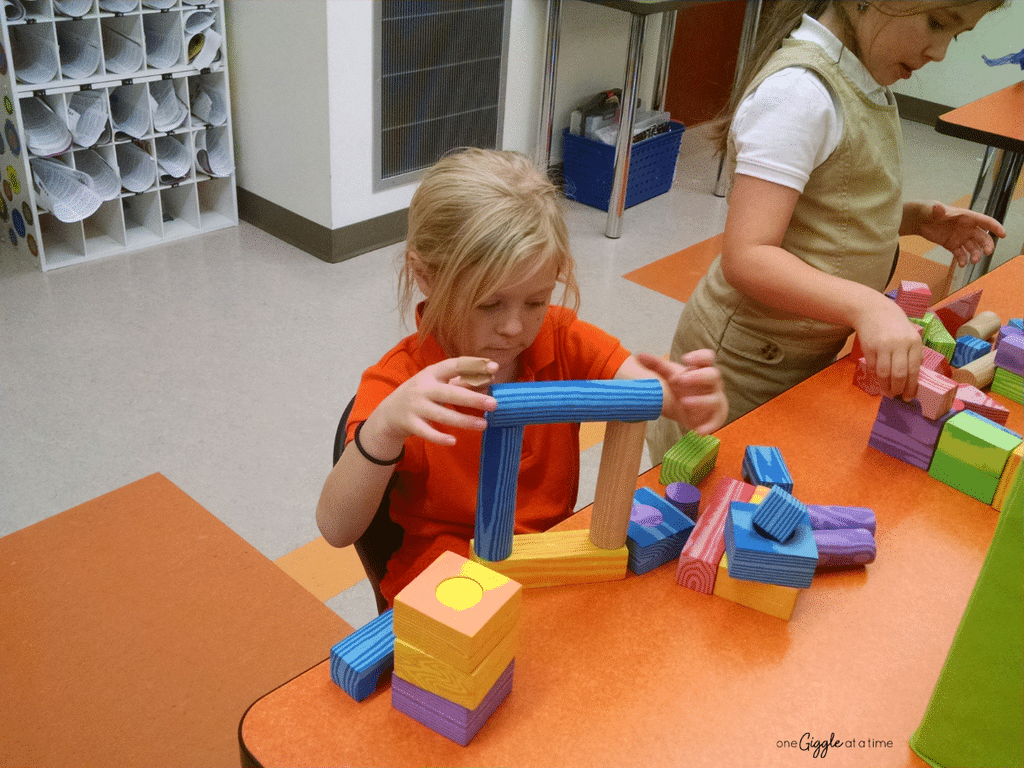
When elementary students practice self-control, they’re going to be better behaved in the classroom, but it’s so much more than that!
As kids transform from kindergarteners into fifth graders, self-control will look different.
How Does Self-Control Look in K-5 Students?
In kindergarten and early primary grades, self-control might look like:
- Learning to use words instead of actions when feeling big emotions
- Not disrupting your friends as the teacher reads aloud
- Using a quiet voice inside when they want to shout
- Walking in line quietly, even though they want to run to the playground
- Resisting the urge to touch classroom materials when they should be listening to the teacher
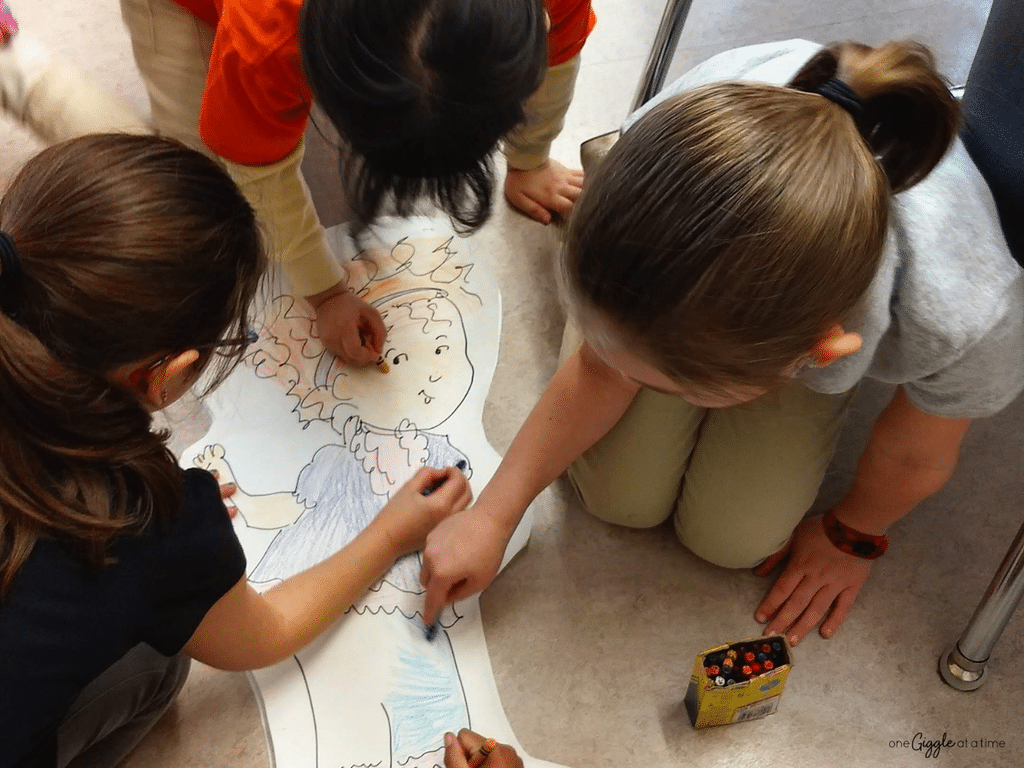
At this age, lots of modeling and support from adults are necessary because self-regulation is still in its early stages of development. It’s very helpful to provide lots of praise when you notice young children making thoughtful choices.
For older elementary students, self-control is a little more complex. Students can show it by:
- Walking away from an argument with a classmate
- Resisting distractions during a test
- Choosing not to respond to teasing
- Deciding not to send a text or post something that is unkind
- Following through on a difficult assignment when they really want to give up
- Refraining from tattling and learning to resolve small conflicts on their own
By upper elementary years, students are more influenced by their peers, their expectations for themselves, and the emotional ups and downs that come with puberty (or the nearness of it!). Be patient with these students and encourage them as they make positive choices that will lead them toward greater independence and confidence in the years ahead.
Why Teaching Kids Self-Control Matters More Than Ever
In today’s fast-paced, overstimulating world, kids can feel emotionally overwhelmed anywhere they go. Screens, social pressure, and greater academic expectations are a lot for a little one to handle. That’s why teaching kids self-control isn’t just helpful— it’s essential!
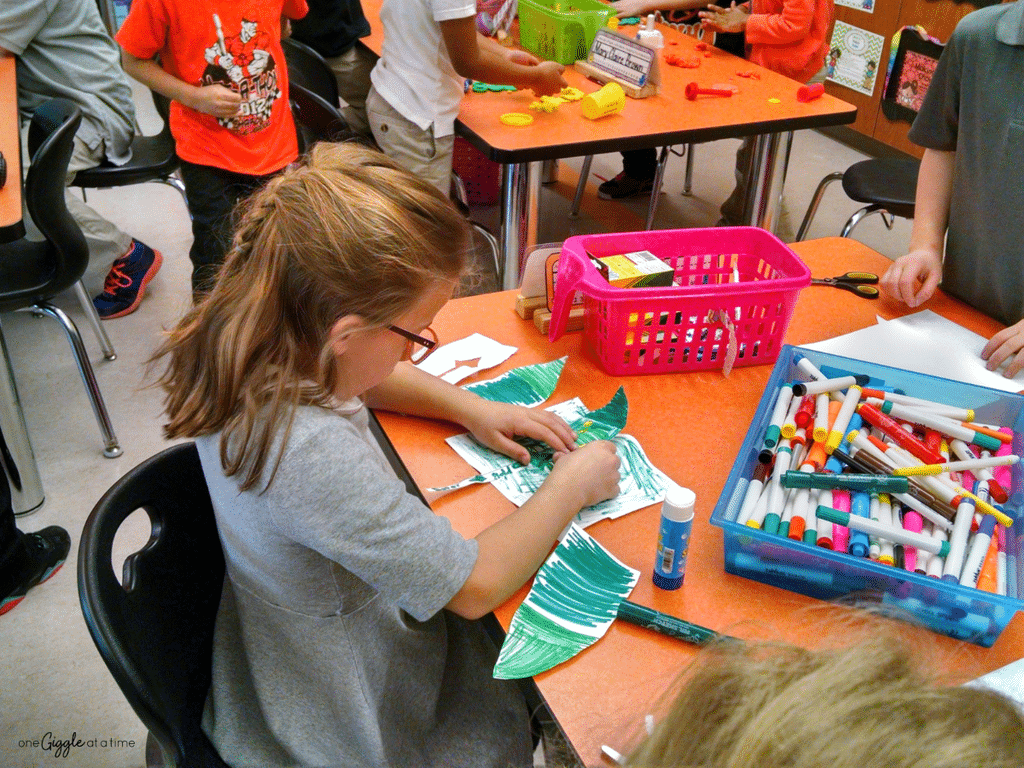
The benefits of teaching kids self-control extend far beyond elementary years. Research in Current Directions in Psychological Science supports that adults who learned self-control earlier in life usually have better mental health, more stable jobs, and stronger social connections.
But How Do I Fit It In?
Okay, so you are totally bought in that self-control is an important skill for children to learn, but you might be wondering HOW…
There’s no denying that teachers, parents, and school counselors already have such full plates.
It sometimes feels impossible to think about adding one.more.thing. First, remind yourself that focusing on self-control in the early years can prevent hours of redirection, frustration, and miscommunication later. It’s a small investment with a lifelong return!
Next, choose intentionally created, highly engaging resources to make teaching kids self-control a breeze! It really doesn’t need to take up a big chunk of your day.
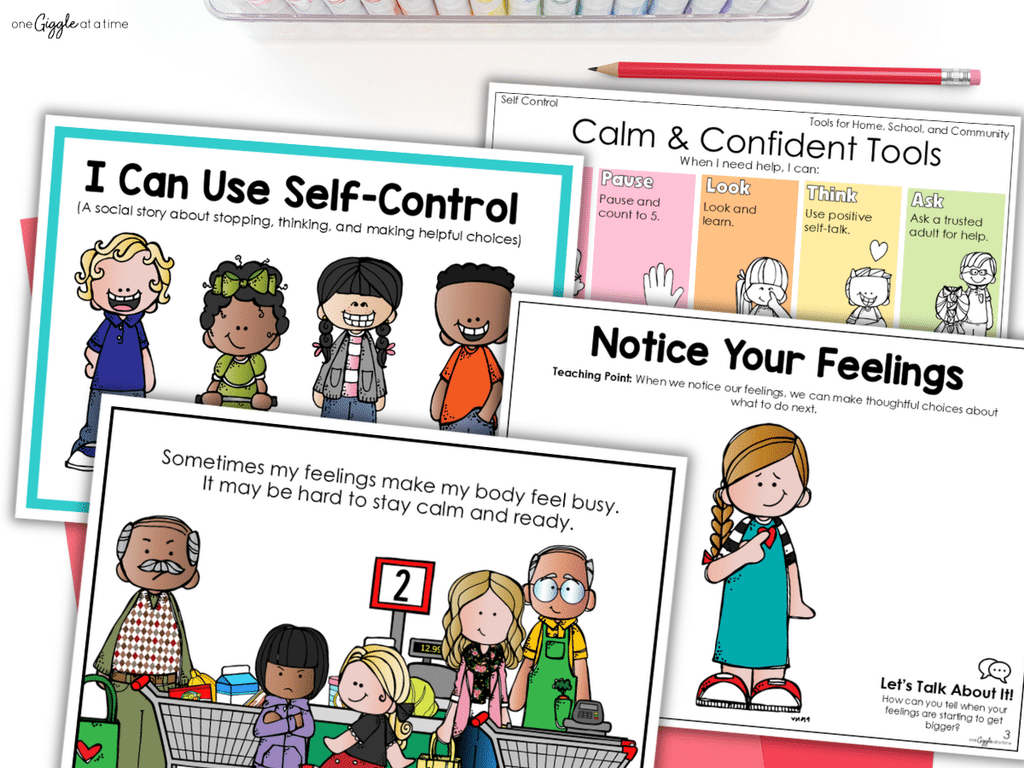
Ready-to-Use Resource for Teaching Self-Control
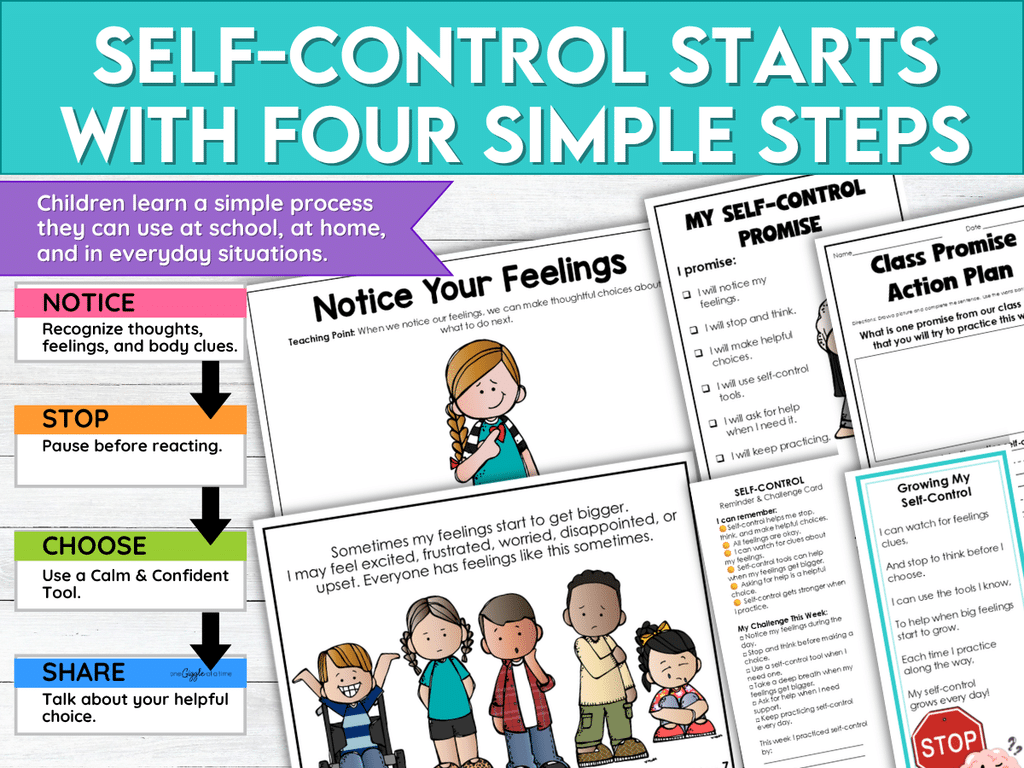
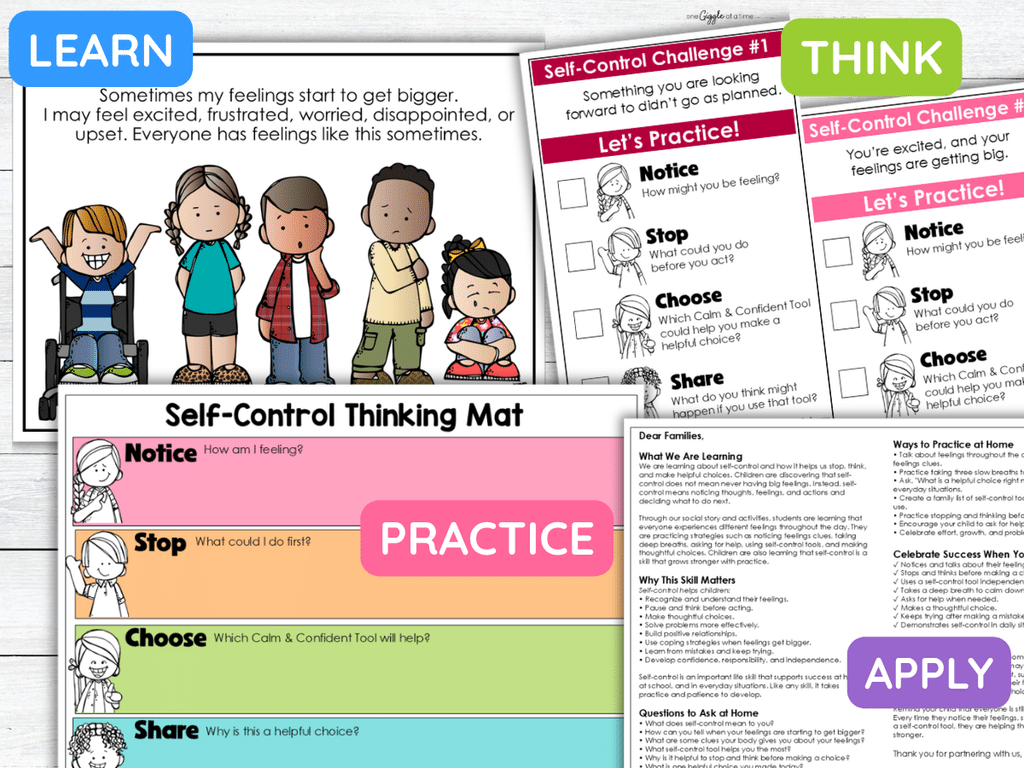
This Self-Control Resource is designed to meet kids exactly where they are in their emotional regulation journey and bring this important skill to life in meaningful ways.
It includes:
- Self-control social story about what having self-control actually looks like
- Discussion questions
- Class pledge
- Student promise action plan
- SEL teaching cards
- Poetry poster, activity, and response
- Social Skills reminder & challenge cards
- Calm & Confident Toolbox
- Parent letter
- Family discussion question
- An easy reader mini book
- Teacher/parent guides
- Easy-to-use lesson plans for you!
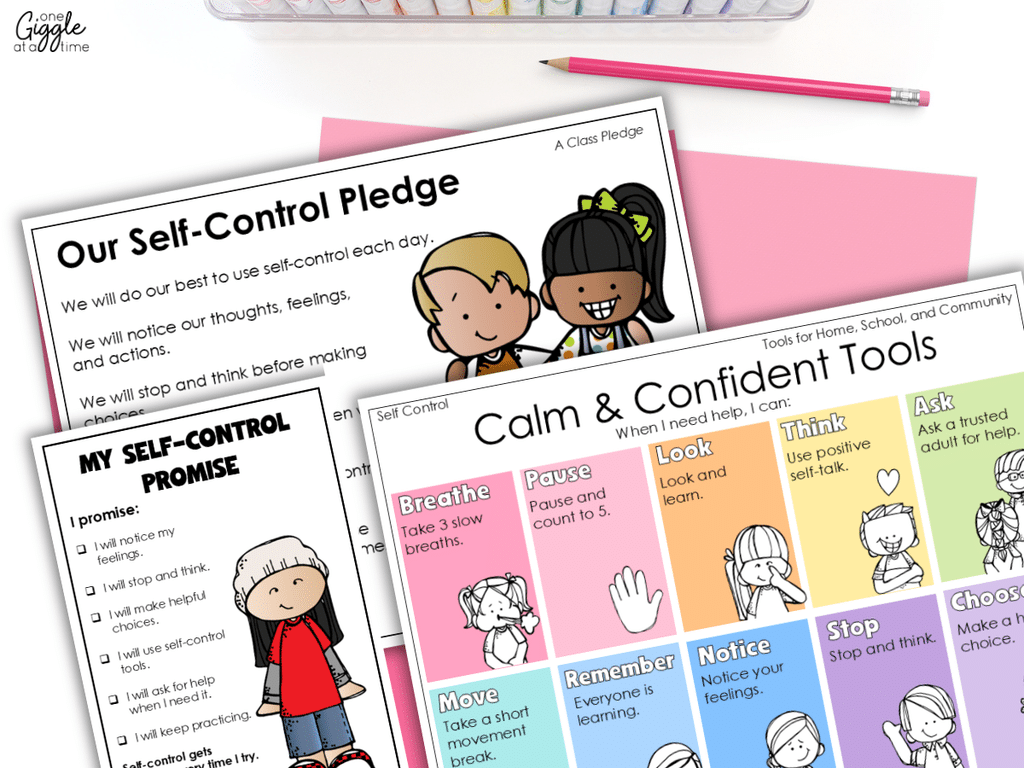

With this interactive resource, kids get to take an active part in the learning process. They get to act it out, sort it out, and talk through what self-control really means. Whether you’re using this with an entire class at school or just your child at home, it’s a great tool to begin real conversations.
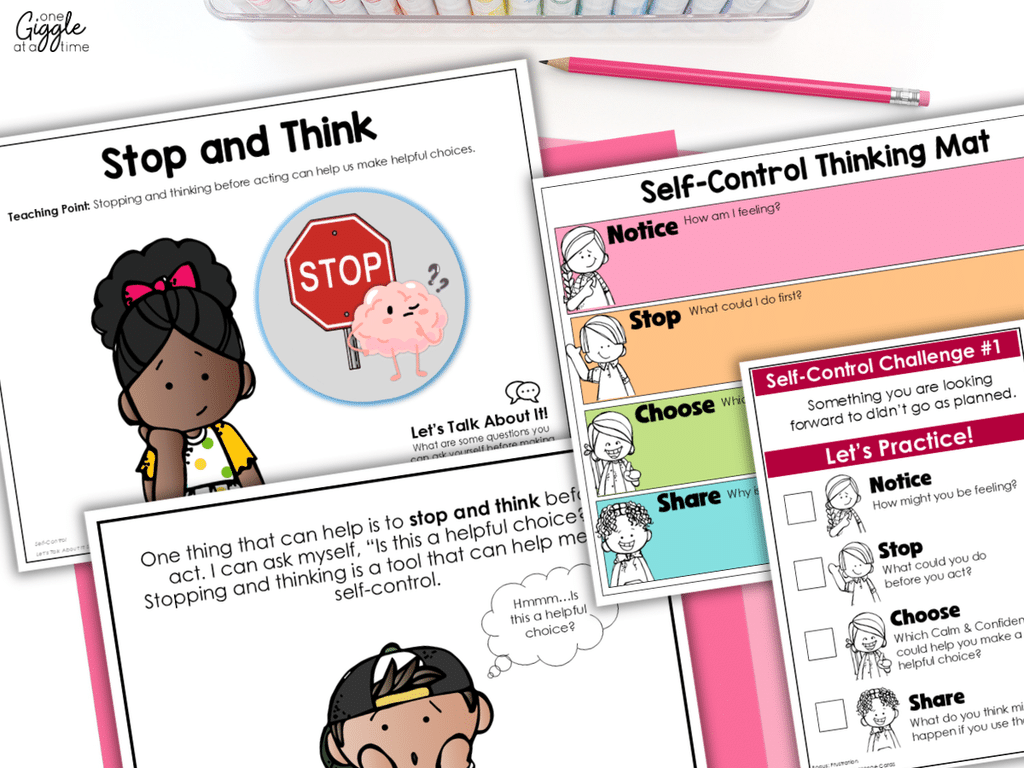
Encouraging Self-Control in Even More Ways at School & Home
As a caring adult in your child’s life, you can encourage self-control in lots of other ways, too!
Think about these:
- Model calm responses out loud when you’re feeling upset or frustrated.
- Set clear expectations and routines to help children feel safe so they can focus on their actions.
- Give lots of opportunities to practice self-control throughout the day.
- Use helpful calming and sensory tools like feelings charts, timers, or calming jars to encourage self-control.
- Talk about emotions together.
- Celebrate moments when you see your child showing self-control— big or small!
Teaching kids self-control doesn’t require anything super fancy at school or at home. Positive reminders, lots of encouragement, and boundless grace go farther than you realize!
Let me know if you have any questions about anything you see here. Don’t forget to pin this post to refer to it later!
Other posts you may enjoy:
7 Favorite Calming and Sensory Tools for Kids: Emotional Regulation Series Part
The POWER of Teaching Active Listening Skills to Elementary Students
The Importance of Using Emotional Regulation Strategies in the Classroom
GUIDE STUDENTS IN DEVELOPING A GROWTH MINDSET WITH THESE
Free Growth Mindset Punch Cards
The perfect way to start meaningful habits and conversations with your students!

Diane Romo
I’m so glad you’re here! I share practical ideas and ready-to-use resources for teachers, parents, homeschoolers, and counselors who want to foster strong relationships and inspire meaningful learning. If you support kids, this space is for you.